
What does mammon mean?
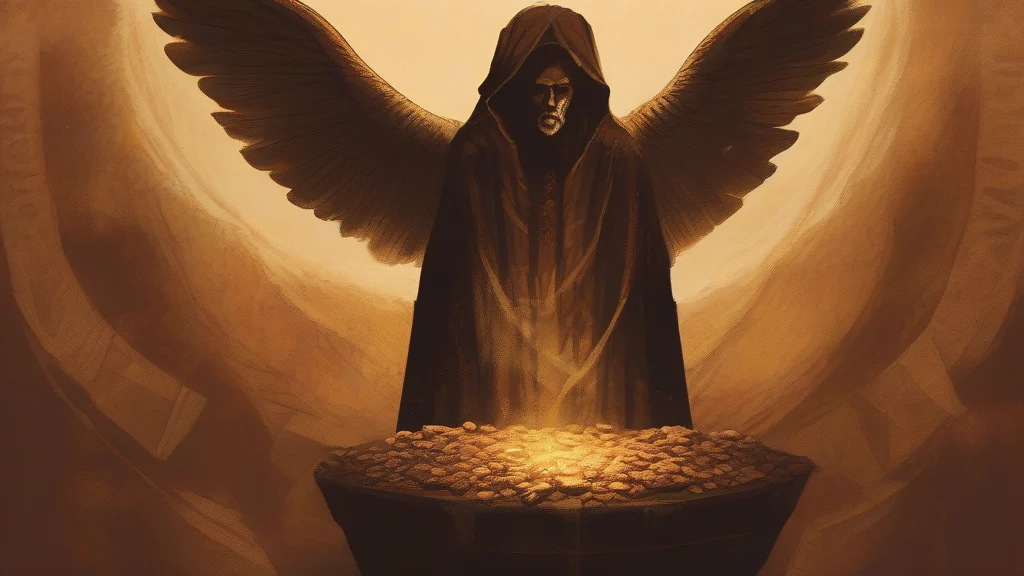
Mammon is a chiefly literary noun for wealth or material possessions viewed as a corrupting influence, especially when the pursuit of money overrides ethical, spiritual, or communal values. The word carries a strongly critical moral tone: it is not a neutral synonym for money, but one that suggests greed, avarice, materialism, or the distorted worship of profit. In modern usage, the noun is usually uncountable, though it can be used as a count noun for a person dominated by greed or for a personified spirit of avarice. Its best-known expression is the biblical warning that one cannot serve both God and Mammon. That association has made the word especially effective in sermons, political rhetoric, and cultural criticism, where it evokes an ancient contrast between spiritual allegiance and the pursuit of wealth. Although English has long used the word, its elevated, archaic flavor can make it sound deliberately solemn or accusatory rather than casual.
nounMaterial wealth or possessions, especially when regarded as a corrupting power that displaces higher moral or spiritual values. It can also name a personification of avarice or greedy materialism.
- Wealth or material possessions regarded as a corrupting influence that overrides moral, spiritual, or communal values.
- A personification of wealth, avarice, or greedy materialism.
"His warning against mammon sounded particularly urgent in a society where profit had come to eclipse every other value."
"The sermon warned against the pursuit of mammon in an age when profit had come to eclipse every other value."
"In the novel, an aging industrialist is portrayed as a modern incarnation of mammon."
Rare; the ordinary use of mammon is uncountable. The plural can refer to people characterized by extreme greed or to embodiments or personifications of avarice.
"The novel portrays two generations of mammons whose wealth isolates them from society."
In one of the Bible's most famous warnings, Jesus says that no one can serve both God and Mammon, making the word a lasting symbol of divided loyalty.
Reviewed by Deb Chak, Editor. AI-assisted content curated by RJS Tech Solutions LLP.
Etymology of mammon
The English word came through medieval Latin mammon from Greek mamōn, ultimately from Aramaic māmōn, meaning wealth or property. Biblical use and later literary tradition, especially John Milton's Paradise Lost, established the name for the personification of wealth or avarice.
Related word forms
How mammon is actually used
Formal, literary, and often moralizing rather than neutral. It is especially associated with biblical and religious discourse and may sound deliberately archaic or accusatory. The name is conventionally capitalized in traditional expressions such as "serve Mammon."