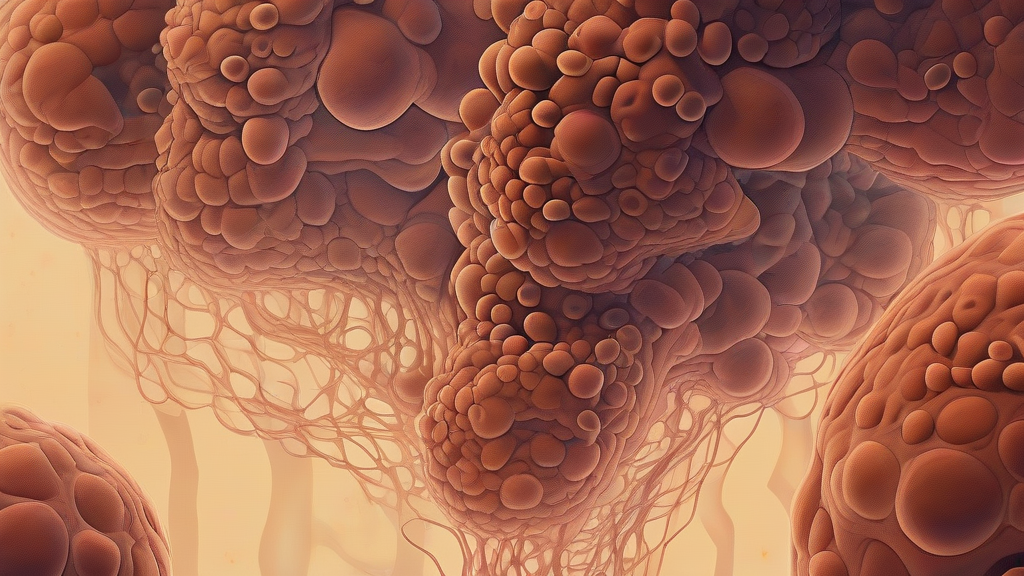
What does alveolation mean?
Alveolation refers to the formation or arrangement of alveoli, which are small air sacs found in the lungs and other organs. This process is crucial for efficient gas exchange in the lungs and is also observed in the cells of certain insects, such as bees, where it forms honeycombs. The term is primarily used in formal or technical contexts, particularly in biology, anatomy, and medical discussions. Understanding alveolation is essential for comprehending various biological and physiological processes.
nounThe formation or arrangement of alveoli, especially in the lungs or in the cells of certain insects.
- The process of forming alveoli.
- The arrangement of alveoli in a tissue or organ.
"The alveolation in the lungs allows for efficient gas exchange."
"The alveolation in the lungs is crucial for respiration."
"The bee's honeycomb showed a complex alveolation."
countable, used to describe multiple instances or types of alveolation
"The study examined various alveolations in different species."
Reviewed by Deb Chak, Editor. AI-assisted content curated by RJS Tech Solutions LLP.
Etymology of alveolation
The term 'alveolation' originates from the Latin word 'alveolus,' meaning 'small hollow' or 'cell.' It is related to 'alveus,' meaning 'hollow' or 'cavity.' The suffix '-ation' is added to form a noun indicating a process or action. The word has developed through Latin and Middle English to its current usage in modern English.
Usage notes
Formal or technical contexts, often used in biology, anatomy, or medical discussions.