
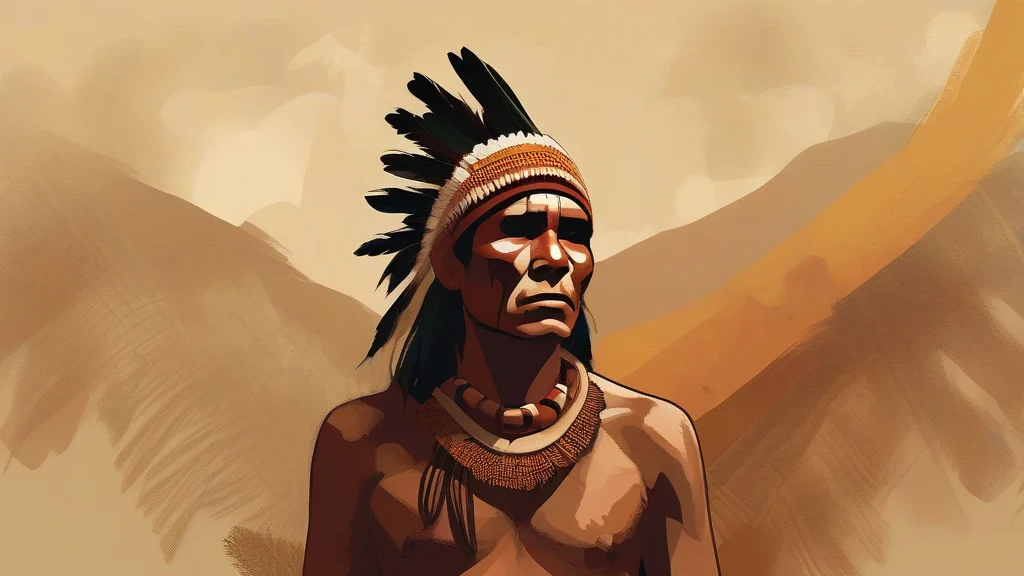
What does cacique mean?
A cacique is an indigenous chief or ruler, originally referring to the leaders of the Taíno and other native peoples of the Caribbean and Central and South America whom Spanish colonists encountered from the late fifteenth century onward. The Spanish borrowed the term from the Taíno language itself, making it one of the earliest words from the indigenous Americas to enter European languages. Over time the meaning broadened: in Spain and much of Latin America today, a cacique is a local political boss — someone who dominates a town or region through patronage, personal networks, and control of resources rather than formal authority. This extended use gave rise to the noun caciquismo, describing boss-dominated politics as a system, a term central to discussions of late nineteenth- and early twentieth-century Spanish history. The word also has a third life in ornithology, where caciques are tropical American blackbirds of the genus Cacicus, famous for weaving communal hanging nests. In its political sense the word is usually pejorative, suggesting corruption, clientelism, and entrenched privilege; in its historical sense it remains neutral, scholarly vocabulary essential for understanding pre-colonial Caribbean society.
An indigenous chief or leader, especially among the Taíno and other peoples of the Caribbean and the Americas at the time of European contact.
"The Spanish chroniclers recorded the names of the caciques who ruled each province of Hispaniola."
A local political boss who controls a community through patronage and influence rather than formal office.
"No candidate could win the district without the blessing of its aging cacique."
This sense is typically pejorative and is associated with the broader system known as caciquismo.
Any of various tropical American blackbirds of the genus Cacicus, which build colonial hanging nests.
"A colony of caciques had draped the riverside fig tree with dozens of woven nests."
The plural is regular: caciques. It applies across all senses of the word, including the bird.
"Several powerful caciques controlled access to water rights throughout the valley."
The same word that once named Taíno kings in Hispaniola now describes machine politicians in rural Spain and Latin America — five centuries of power politics in two syllables.
Reviewed by Deb Chak, Editor. AI-assisted content curated by RJS Tech Solutions LLP.
Etymology of cacique
Cacique entered Spanish directly from Taíno, the Arawakan language of the Caribbean, where it denoted a native chief; it is among the very first indigenous American words adopted into European languages following Columbus's voyages. From Spanish it spread into English in the sixteenth century, initially used in accounts of the West Indies, and later acquired its extended meaning of local political boss, particularly in Spain and Latin America. The related term caciquismo derives from the same root and names the boss-rule system itself.
How cacique is actually used
In its original historical sense, cacique is largely descriptive; in its extended sense it carries a strongly pejorative connotation, implying corruption and entrenched local privilege. The plural is normally 'caciques' (/kəˈsiːks/), though the anglicized spelling variant 'cacique' with pronunciation /ˈkeɪsiːk/ also appears in older British texts. In academic writing on colonial Latin America, the word is standard terminology for indigenous elites.
Easily confused with cacique
Despite both entering English from Caribbean sources, 'cacique' means a native chief or local boss, while 'mosquito' refers to a biting insect.