
What does coxcomb mean?
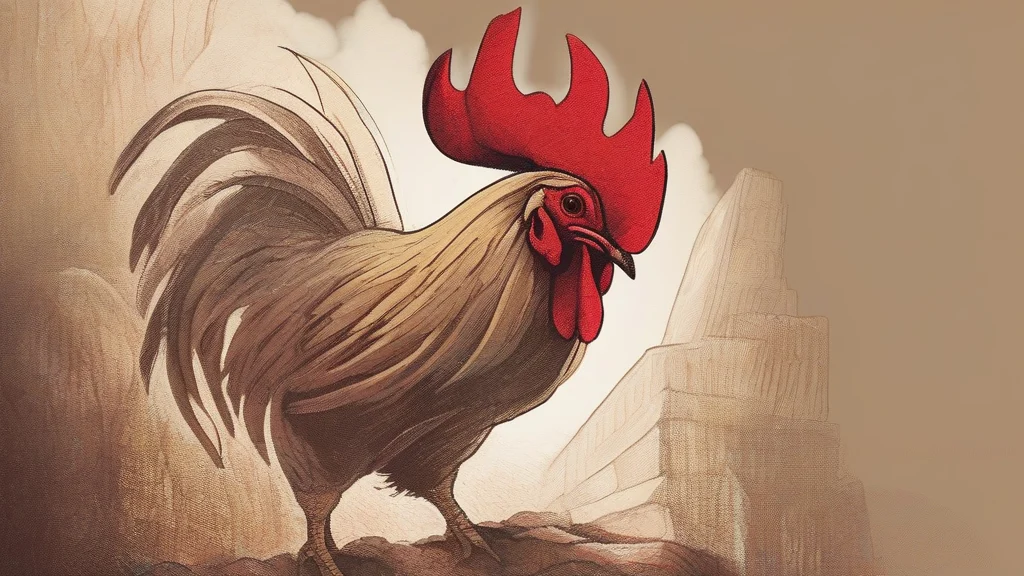
A coxcomb is a man who is excessively vain, conceited, and showy — someone preoccupied with his own appearance and importance, often to the point of foolishness. The word carries a mocking, contemptuous tone and belongs largely to literary and somewhat old-fashioned register, though it remains readily understood. Its history is vivid: it derives from "cockscomb," the fleshy red crest on a rooster's head, which was thought to resemble certain extravagant hairstyles of the sixteenth century. By extension, the term came to name the jester's cap with its scalloped, crest-like points, and thus the fool himself, before settling into its modern sense of a shallow dandy. Writers from Shakespeare onward used it to puncture pomposity, and it remains useful whenever one wishes to ridicule a self-admiring, frivolous character. Related terms include fop, dandy, and popinjay, all describing men undone by vanity.
A conceited, foolish, and showy man; a vain fop.
"Critics dismissed the young playwright as an empty coxcomb who cared more for his cravat than his craft."
Now somewhat archaic or literary, but still understood as a pointed insult implying vanity and silliness.
(Historical) The crest of a rooster, or a jester's cap made with serrated points resembling such a crest.
"The court fool's coxcomb, with its drooping points and bells, marked him at once in the crowd."
Largely historical; survives mainly in discussions of medieval and Renaissance costume and in the idiom "wearing the coxcomb" for playing the fool.
The standard plural simply adds -s.
"The salon was crowded with coxcombs admiring their own reflections."
"Coxcomb" began life as an insult you could see: it mocked vain men by comparing their haircuts to a rooster's ridiculous red crest.
Reviewed by Deb Chak, Editor. AI-assisted content curated by RJS Tech Solutions LLP.
Etymology of coxcomb
"Coxcomb" originates from Middle English "cokkes comb(e)", literally the comb or crest of a cock (rooster), a compound of "cock" and "comb." In the sixteenth century the word was applied mockingly to men wearing extravagantly shaped hair or headgear resembling a rooster's crest, and by extension to the jester's serrated cap and hence to fools generally. Over time its meaning narrowed to a vain, self-conceited fop, the sense dominant today. It shares its first element with other English "cock-" compounds such as weathercock and shuttlecock.
How coxcomb is actually used
"Coxcomb" is a somewhat dated but still understood insult, carrying connotations of vanity, shallowness, and self-importance rather than mere stupidity in modern use. It has a literary, slightly archaic flavor and appears most often in historical fiction or pointed satire.
Easily confused with coxcomb
"Cockscomb" refers to the fleshy red crest of a rooster (or a plant named for it), while "coxcomb" is chiefly a term for a vain, foolish man — though the two share the same literal origin.