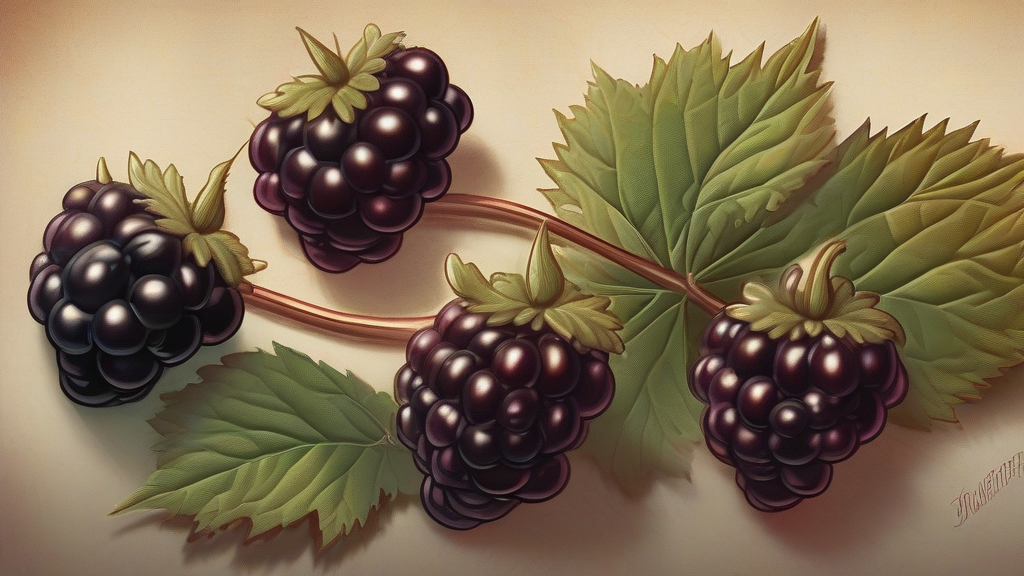
What does dewberry mean?
A dewberry is a trailing bramble closely related to the blackberry, belonging to the large and variable genus Rubus. In Europe the name chiefly denotes Rubus caesius, a low-growing plant with bluish, waxy-coated fruits, while in North America it covers several trailing species whose sweet, dark berries ripen in early summer — often before blackberries appear. The plant sprawls along the ground on long, weak stems rather than forming upright canes, which is one of the easiest ways to distinguish it from its better-known relative. The word is used both for the plant itself and for its edible fruit, which people have long gathered wild for pies, jams, and fresh eating. Dewberry has a distinctly rural, nostalgic flavour in American English, evoking hedgerows, country lanes, and stained fingers, and it remains a beloved if somewhat old-fashioned term in regions where berry-picking is part of local tradition.
nounA dewberry is any of several trailing brambles of the genus Rubus, closely related to blackberries, especially Rubus caesius of Europe or various North American species. It also refers to the edible dark-purple fruit these plants bear.
- A trailing bramble of the genus Rubus related to the blackberry.
- The small, dark-purple edible fruit of this plant.
"We spent the afternoon gathering dewberries along the hedgerow, our fingers stained purple."
"The children came home with baskets full of wild dewberries."
"Dewberries trail along the ground in thick mats across the field's edge."
The standard plural follows regular English noun inflection; it is used for multiple fruits or multiple plants.
"The vines were heavy with ripe dewberries."
The dewberry gets its name from the belief that its fruit is best picked while still wet with morning dew.
Reviewed by Deb Chak, Editor. AI-assisted content curated by RJS Tech Solutions LLP.
Etymology of dewberry
The word dewberry is a straightforward English compound of 'dew' and 'berry', first recorded in English in the late Middle Ages; the name alludes to the fruit's habit of ripening early in the season when mornings are still heavy with dew, or possibly to the dewy, damp habitats where the trailing plants flourish. Both elements are native Germanic words inherited through Old English (dēaw and berie). The compound structure parallels other berry names such as strawberry, bilberry, and cloudberry, reflecting a long English tradition of coining fruit names from familiar natural imagery.
How dewberry is actually used
The word is most familiar in rural and regional American English, particularly in the South and Midwest, where picking wild dewberries is a seasonal tradition. In British English it typically refers specifically to Rubus caesius, known as the European dewberry. It carries a rustic, nostalgic connotation rather than a technical one.
Easily confused with dewberry
Dewberries grow on trailing vines close to the ground, whereas blackberries grow on upright, arching canes; the fruits are similar but dewberries ripen earlier and are usually smaller.