What does dinosaurs mean?
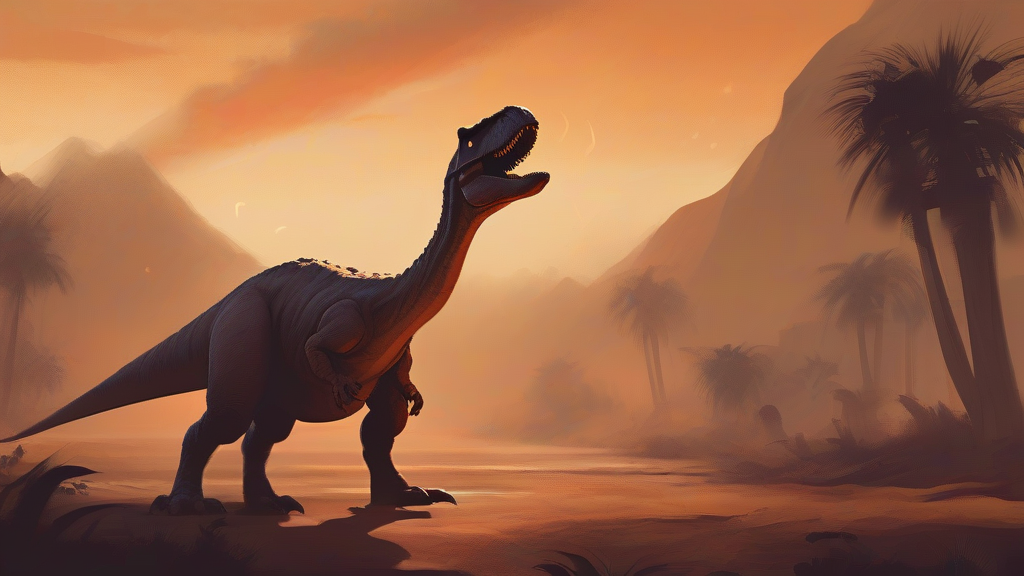
Dinosaurs were a diverse group of reptiles that roamed the Earth during the Mesozoic Era. They were characterized by their scaly skin, bony skeletons, and a wide range of sizes and shapes. From the small Compsognathus to the massive Argentinosaurus, dinosaurs were a dominant force on Earth for over 150 million years. Their fossils have been found on every continent and have provided valuable insights into their evolution, behavior, and extinction. Despite their size and strength, dinosaurs were also highly specialized and adapted to their environments in unique ways. The study of dinosaurs continues to captivate scientists and the general public alike, and their legacy remains an important part of our understanding of the natural world.
noun
A group of reptiles that dominated Earth's landscapes during the Mesozoic Era.
"The discovery of dinosaur fossils in the Gobi Desert has shed new light on the evolution of these fascinating creatures."
noun
A specific type of dinosaur, such as a Tyrannosaurus or Velociraptor.
"The Tyrannosaurus was a large carnivorous dinosaur that lived during the Cretaceous period."
Reviewed by Deb Chak, Editor. AI-assisted content curated by RJS Tech Solutions LLP.
Etymology of dinosaurs
The word 'dinosaur' was coined by Sir Richard Owen in 1842, from the Greek words 'deinos' meaning 'terrible' and 'saurus' meaning 'lizard'. The term was originally used to describe a group of large reptiles that were discovered in England during the 19th century.
Usage notes
The term 'dinosaur' is often used to refer to any large reptile, but technically it refers specifically to a group of reptiles that lived during the Mesozoic Era. The study of dinosaurs is a multidisciplinary field that involves paleontology, geology, and biology.