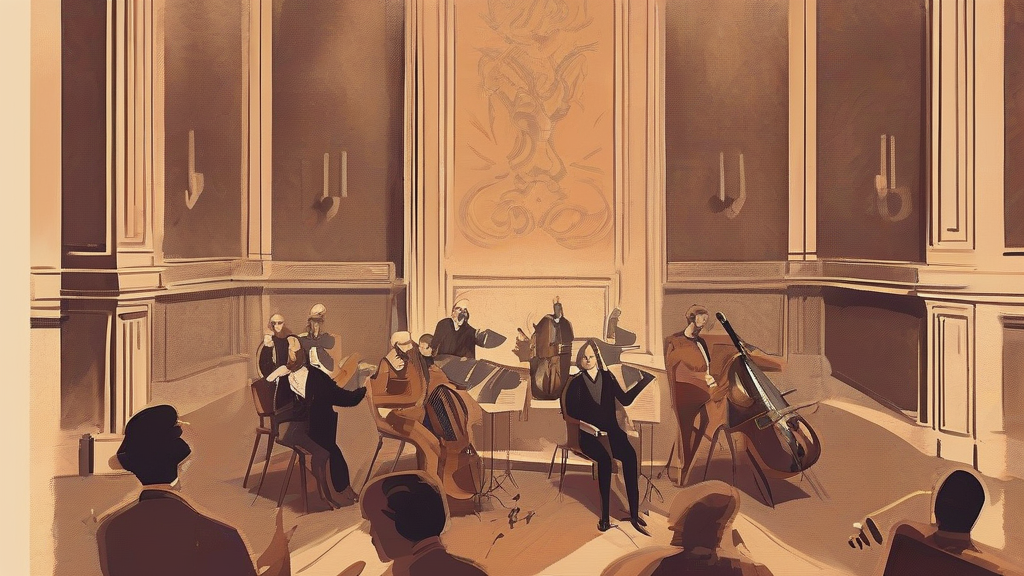
What does divertimento mean?
A divertimento is a type of lighthearted or entertaining music, often written for an orchestra or chamber ensemble. The term can also refer to an amusing or diverting activity, such as reading a book or watching a movie. Divertimentos are typically characterized by their playful and entertaining nature, providing a welcome respite from the stresses of everyday life. The word has been used in English since the 18th century, and its musical connotations remain an important part of its meaning. Overall, divertimento is a useful word for describing activities or works of art that bring joy and entertainment.
A lighthearted or entertaining piece of music
"The composer wrote a divertimento for string quartet that was performed at the festival."
In music, divertimento often refers to works from the Classical period.
An amusing or diverting activity
"Reading a book is a great divertimento on a long flight."
The plural form is used when referring to multiple pieces of music or activities.
"The composer's divertimentos were popular among audiences."
Reviewed by Deb Chak, Editor. AI-assisted content curated by RJS Tech Solutions LLP.
Etymology of divertimento
The word divertimento comes from the Italian language, where it is derived from the verb 'divertire', meaning 'to divert' or 'to entertain'. This verb is itself derived from the Latin 'divertere', which carries a similar meaning. The term has been used in English since the 18th century, primarily in musical contexts.
Usage notes
In music, divertimento is often used to describe works from the Classical period, such as those by Mozart. In general usage, it can refer to any activity that provides entertainment or distraction.