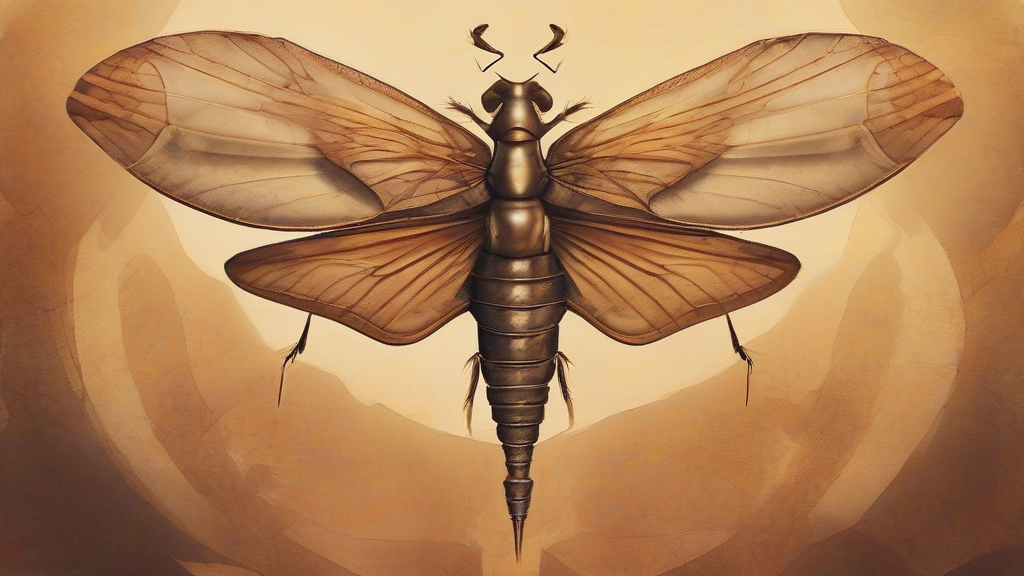
What does episternum mean?
The episternum is a crucial component of an insect's exoskeleton, playing a vital role in its overall structure and function. It is a dorsal plate that covers the base of the wings and the thorax, providing protection and support to the insect's body. The episternum is a key feature in the anatomy of insects, particularly in beetles and flies, and is often used in entomological studies to determine species and classify insects. In addition to its functional importance, the episternum is also a distinctive feature that can be used to identify and distinguish between different insect species. Overall, the episternum is a fascinating and complex structure that is essential to the biology and ecology of insects.
nounThe episternum is a part of the insect exoskeleton, specifically the dorsal plate that covers the base of the wings and the thorax. It is a key feature in the anatomy of insects, particularly in beetles and flies.
- 1. The dorsal plate that covers the base of the wings and the thorax in insects.
"The entomologist carefully examined the episternum of the beetle specimen to determine its species."
"The entomologist carefully examined the episternum of the beetle specimen to determine its species."
"The episternum of the fly was damaged during the dissection process."
Reviewed by Deb Chak, Editor. AI-assisted content curated by RJS Tech Solutions LLP.
Etymology of episternum
The word 'episternum' is derived from the Greek words 'epi' meaning 'upon' and 'sternon' meaning 'chest'. It was first used in the 19th century to describe the dorsal plate of insects.
Usage notes
The term 'episternum' is primarily used in entomological contexts to describe the anatomy of insects. It is a formal term and is not commonly used in everyday language.