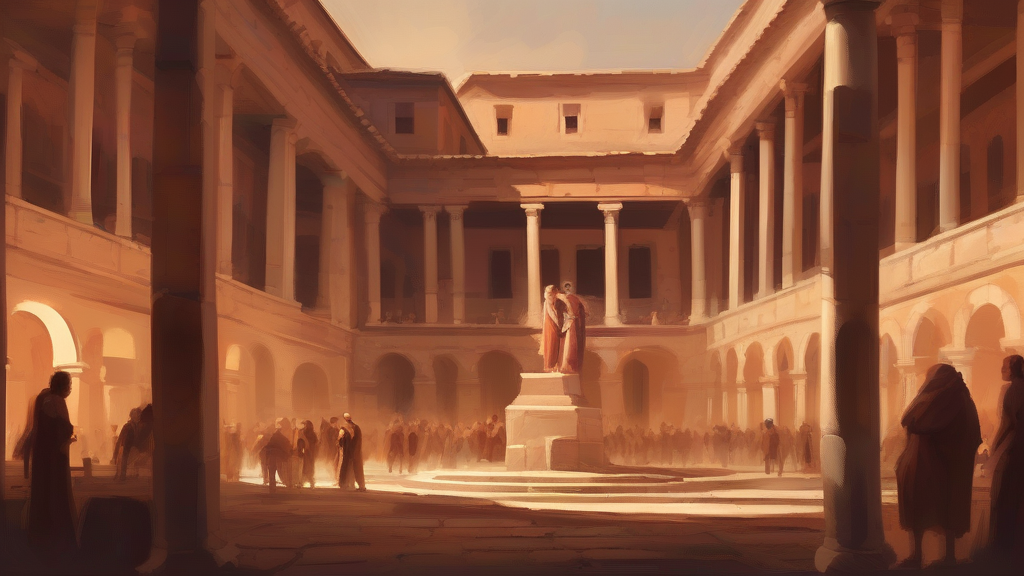
What does fora mean?
A fora is a public square or marketplace in ancient Roman cities, serving as a center of public life, discussion, and commerce. The Roman Forum, or Forum Romanum, was a famous example of a large public fora in the heart of ancient Rome. The word fora has been adopted in modern contexts to describe similar public spaces or centers of discussion and community. Fora were often surrounded by important buildings such as temples, basilicas, and markets, and played a vital role in the social and economic life of ancient Roman cities. Understanding the concept of a fora provides insight into the culture and daily life of ancient Romans.
nounA fora is a public square, marketplace, or other gathering place in ancient Roman cities. It was also used to describe a center of public life, discussion, and commerce.
- A public square or marketplace in ancient Roman cities
- A center of public life, discussion, and commerce
"The Roman Forum, or Forum Romanum, was a large public fora in the heart of ancient Rome."
"The ancient city had several fora, each serving a different purpose."
"The modern city was designed with a large public fora at its center."
The plural form fora is often used to refer to multiple public squares or marketplaces.
"The city had several fora, each serving a different purpose."
Reviewed by Deb Chak, Editor. AI-assisted content curated by RJS Tech Solutions LLP.
Etymology of fora
The word fora originates from Latin, where it is the nominative plural form of forum, meaning 'public square' or 'marketplace'. The Latin term is derived from the verb forare, meaning 'to dig' or 'to excavate', possibly referring to the process of digging or excavating a public space. The word fora has been adopted into various languages, including English, to describe similar public spaces or centers of discussion and community.
Usage notes
The word fora is often used in historical or architectural contexts to refer to ancient Roman public spaces. It can also be used more broadly to describe a center of public life or discussion.