
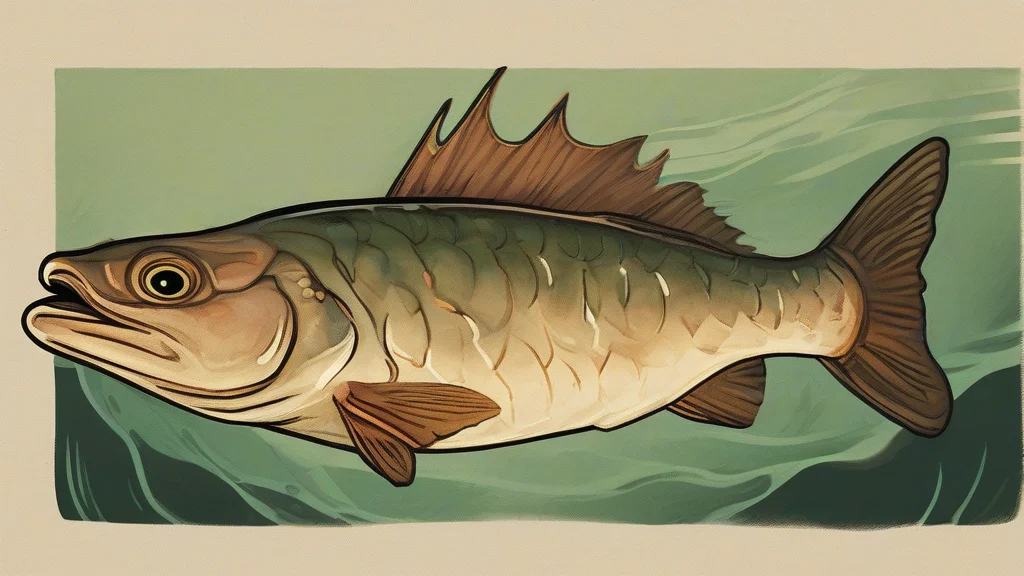
What does greenling mean?
Greenling is chiefly the name of a group of marine fishes native to the North Pacific, particularly in Alaska, British Columbia, and the Pacific Northwest. The most familiar member is the common greenling, Hexagrammos decagrammus, widely known by another name, lingcod, and valued as a food fish because of its mild flavor and firm white flesh. Other greenlings include the Atka greenling and masked greenling. Although greenling can refer broadly to members of the family Hexagrammidae, regional usage sometimes applies it specifically to the common greenling. The term is therefore especially familiar in fishing communities, seafood markets, and regional cooking, but it is not a general term for green-colored fish. In menus, travel writing, and descriptions of North Pacific fisheries, greenling conveys both regional identity and a straightforward reference to a distinctive group of Pacific fishes.
nounAny of several marine fishes of the family Hexagrammidae, especially the common greenling, found in the North Pacific. In regional usage, greenling may also be an alternative name for the fish commonly called lingcod.
- Any of several North Pacific marine fishes of the family Hexagrammidae, especially the common greenling, Hexagrammos decagrammus; in some regions, the term is also used as an alternative name for lingcod.
"The restaurant served grilled greenling with lemon and fresh herbs."
"Anglers caught several greenling near the rocky coast."
"Greenling is a familiar seafood choice in coastal Alaska."
The plural is used when referring collectively to the fish or to multiple individual fish.
"The harbor market sells greenlings caught along the coast."
A greenling is a fish with an almost embarrassingly literal name—and one of its North Pacific relatives is the prized lingcod.
Reviewed by Deb Chak, Editor. AI-assisted content curated by RJS Tech Solutions LLP.
Etymology of greenling
Greenling is an English compound formed from green and the Germanic-derived diminutive suffix -ling, familiar in words such as duckling and sapling. Green ultimately comes from Old English grēne, meaning green, fresh, or young. The compound developed as a descriptive name for greenish North Pacific fishes, while -ling gives the word its familiar, slightly diminutive character.
Related word forms
How greenling is actually used
The word is most common in regional fisheries, seafood, and culinary contexts in Alaska, British Columbia, and the Pacific Northwest. Its use is less familiar in British English generally. Usage varies between treating greenling as a broad family name and using it specifically for the fish also known as lingcod.
Easily confused with greenling
Greenling can denote several members of the greenling family, while lingcod usually refers specifically to the common greenling, Hexagrammos decagrammus.