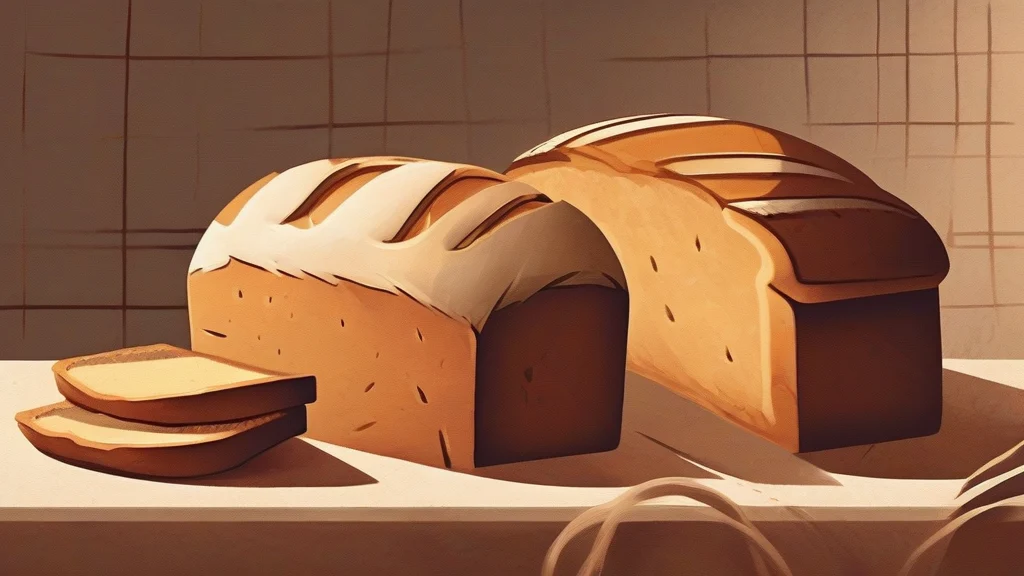
What does loaf mean?
The word 'loaf' has multiple meanings and uses. As a noun, it refers to a shaped quantity of bread, cake, or other baked goods. For example, one might buy a loaf of bread at the store. The term can also refer to a block or chunk of other materials. As a verb, 'loaf' means to spend time doing nothing or being idle, often implying laziness. This usage is commonly seen in phrases like 'loafing around.' The word's versatility makes it useful in various contexts, from culinary discussions to descriptions of behavior. Understanding the different senses of 'loaf' can help clarify its meaning in different situations.
A shaped mass of food, especially bread or cake.
"The bakery sold various types of loaves daily."
In this sense, 'loaf' often refers to a single unit of baked goods.
To spend time idly or doing nothing.
"He spent the day loafing around the house."
This usage often carries a connotation of laziness or lack of productivity.
The plural form 'loaves' is used for multiple units of the food or for multiple blocks or chunks of material.
"She bought two loaves of bread for the party."
Reviewed by Deb Chak, Editor. AI-assisted content curated by RJS Tech Solutions LLP.
Etymology of loaf
The word 'loaf' originated from the Old English word 'hlāf,' which referred to a mass of bread. This term evolved into Middle English as 'loaf,' maintaining its association with bread and baked goods. The verb sense of 'loaf,' meaning to be idle, emerged in the late 19th century, possibly related to the idea of doing nothing rather than working to earn one's bread.
How loaf is actually used
The term 'loaf' can have different connotations depending on the context; as a noun, it generally refers to a type of food, while as a verb, it implies laziness or idleness.