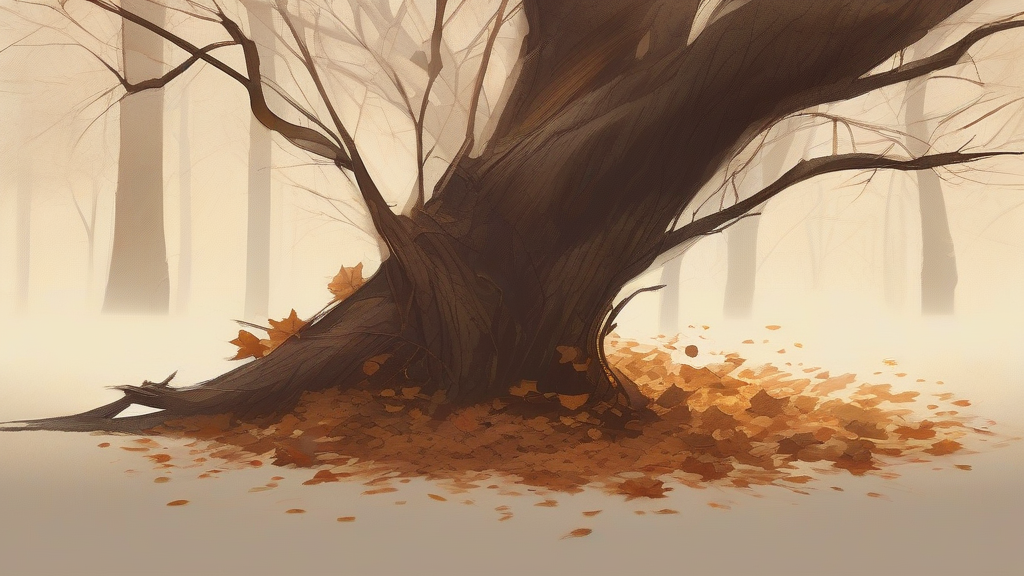
What does marcescence mean?
Marcescence refers to the phenomenon where withered or dead leaves persist on a plant, typically a deciduous tree, through the winter months. This characteristic is often observed in certain tree species, such as beech and oak. Marcescence can provide a habitat for insects and other small animals during the winter, and can also serve as a food source. The term is primarily used in botany and ecology, and has a somewhat technical connotation. Understanding marcescence can help appreciate the complex relationships between plants and their environment.
nounThe persistence of withered or dead leaves on a plant, especially a deciduous tree, through the winter months.
- The phenomenon of withered leaves persisting on a plant.
- A specific instance of withered leaves persisting on a plant.
"The marcescence of the oak tree's leaves provided a habitat for various insects during the winter."
"The beech tree's marcescence was a notable feature of the winter landscape."
"Marcescence can provide a food source for animals during the winter months."
The plural form is used when referring to multiple instances of marcescence.
"The forest exhibited multiple instances of marcescences among its deciduous tree species."
Reviewed by Deb Chak, Editor. AI-assisted content curated by RJS Tech Solutions LLP.
Etymology of marcescence
The term 'marcescence' originates from the Latin word 'marcescere,' meaning 'to wither' or 'to fade.' It has been used in English since the 17th century to describe the persistence of withered leaves on plants.
Usage notes
This term is primarily used in botany and ecology. It has a somewhat technical connotation.