
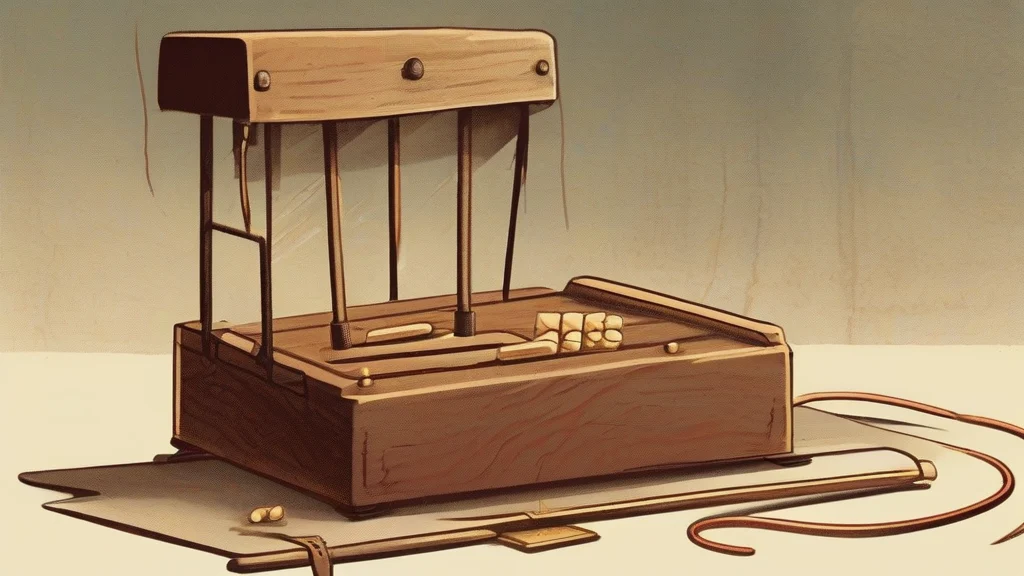
What does mousetrap mean?
A mousetrap is literally a mechanical device designed to catch mice, usually by baiting it and then closing or snapping when the animal takes the bait. Figuratively, the word describes a scheme, tactic, or attractive offer intended to lure a person into becoming entrapped. Such a metaphorical mousetrap is often deceptive: its apparent benefit conceals a condition, cost, or commitment from which the target cannot easily withdraw. The expression can therefore suggest enticement, manipulation, or a situation with no straightforward exit. As a verb, “mousetrap” means to catch or ensnare someone, especially by deception. Although its literal referent is familiar, the word remains useful because it captures both the attraction and the confinement involved in being caught. It is recognized in ordinary British and American English, though the figurative verb is less frequent than the noun.
A device or trap for catching mice; figuratively, a scheme or bait designed to ensnare someone or prevent an easy escape.
"The deceptive low-price offer was a mousetrap for unwary customers."
The figurative sense is widespread in British and American English and commonly implies both inducement and entrapment.
To catch or ensnare someone, especially by deception or inducement.
"The advertisement appeared designed to mousetrap consumers into a long-term contract."
This verb is relatively uncommon and is chiefly used when deliberate entrapment or deception is implied.
The regular plural adds “-s” and is used for both literal devices and figurative schemes or inducements.
"The investigators discovered several mousetraps hidden beneath the floorboards."
The everyday trap for a tiny animal became English shorthand for a much larger trap: an offer or tactic designed to lure, deceive, and leave its target with no easy escape.
Reviewed by Deb Chak, Editor. AI-assisted content curated by RJS Tech Solutions LLP.
Etymology of mousetrap
Mousetrap was formed in English by combining the older words “mouse” and “trap,” and it was in use by the late Middle English period. “Mouse” descends from Old English “mous,” while “trap” comes from Old English “træppe,” an older word for a snare or device for catching animals. Related English forms include “mouser,” meaning a person or animal that catches mice, and “trapper,” meaning one who sets traps.
How mousetrap is actually used
The figurative senses often carry a negative or suspicious connotation, suggesting deception, enticement, and restricted escape. The verb is less common than the noun but is used particularly in contexts involving deliberate entrapment.