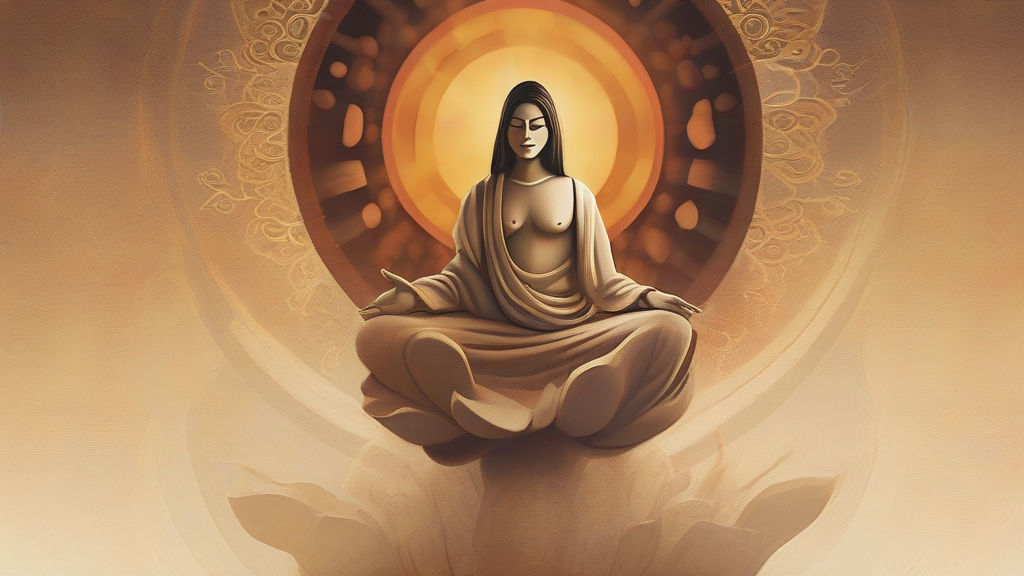
What does nirvana mean?
Nirvana refers to a state of ultimate happiness and liberation from the cycle of birth and death in Eastern religions such as Buddhism and Hinduism. In Western usage, it describes a state of perfect happiness or bliss. The concept of nirvana is central to Buddhist and Hindu philosophies, where it represents the ultimate goal of spiritual practice. In everyday language, nirvana is often used metaphorically to describe a state of great happiness or satisfaction, such as a perfect vacation or a fulfilling experience. The word has become a popular cultural reference, often symbolizing a state of ideal happiness or contentment.
A state of ultimate happiness and liberation from the cycle of birth and death in Eastern religions.
"The Buddhist monk sought to attain nirvana through meditation and self-denial."
In Eastern religions, nirvana is a specific spiritual goal.
A state of perfect happiness or bliss in Western usage.
"The couple's tropical vacation was a taste of nirvana for them."
In Western usage, nirvana often refers to a state of great happiness or satisfaction.
Reviewed by Deb Chak, Editor. AI-assisted content curated by RJS Tech Solutions LLP.
Etymology of nirvana
The word nirvana comes from the Sanskrit निर्वाण (nirvāṇa), which means 'extinction' or 'cessation'. It is derived from the root वा (vā), which means 'to blow out' or 'to extinguish'. In Buddhist philosophy, nirvana refers to the extinction of desire, hatred, and ignorance, which are seen as the causes of suffering. The concept of nirvana has been adopted into various Eastern and Western spiritual traditions, often with slightly different connotations.
Usage notes
In Eastern religions, nirvana is a specific spiritual goal. In Western usage, it often refers to a state of great happiness or satisfaction.