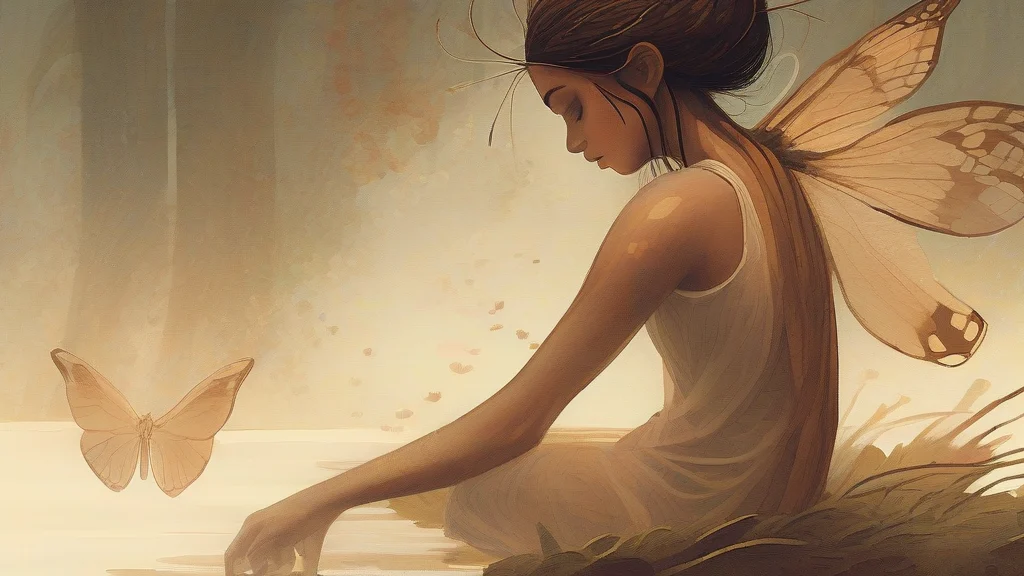
What does nymphal mean?
The term 'nymphal' has two primary applications. In mythology and poetry, it describes something or someone that resembles or relates to nymphs, often conveying a sense of youthful beauty and vitality. In a scientific context, particularly in entomology, 'nymphal' refers to the immature stages of certain insects, such as butterflies and beetles, that undergo incomplete metamorphosis. This stage is characterized by significant growth but not a complete transformation into the adult form. Understanding the nymphal stage is crucial for studying the life cycles of these insects and their ecological roles.
Relating to or resembling nymphs, especially in being mythologically or poetically depicted as youthful and beautiful.
"The artist's depiction of the forest scene was filled with nymphal figures."
Of or relating to the nymphal stage of an insect's life cycle.
"The entomologist studied the nymphal stages of various insect species."
In entomology, 'nymphal' specifically refers to the immature stages of insects that undergo incomplete metamorphosis.
Reviewed by Deb Chak, Editor. AI-assisted content curated by RJS Tech Solutions LLP.
Etymology of nymphal
The word 'nymphal' originates from the Greek 'nymphē', meaning 'bride' or 'young woman', which was later adopted into Latin as 'nympha'. The term evolved through Old French into Middle English, initially retaining its mythological connotations. Over time, its usage expanded to include scientific descriptions in entomology.
How nymphal is actually used
In entomology, 'nymphal' specifically refers to the immature stages of insects that undergo incomplete metamorphosis.