
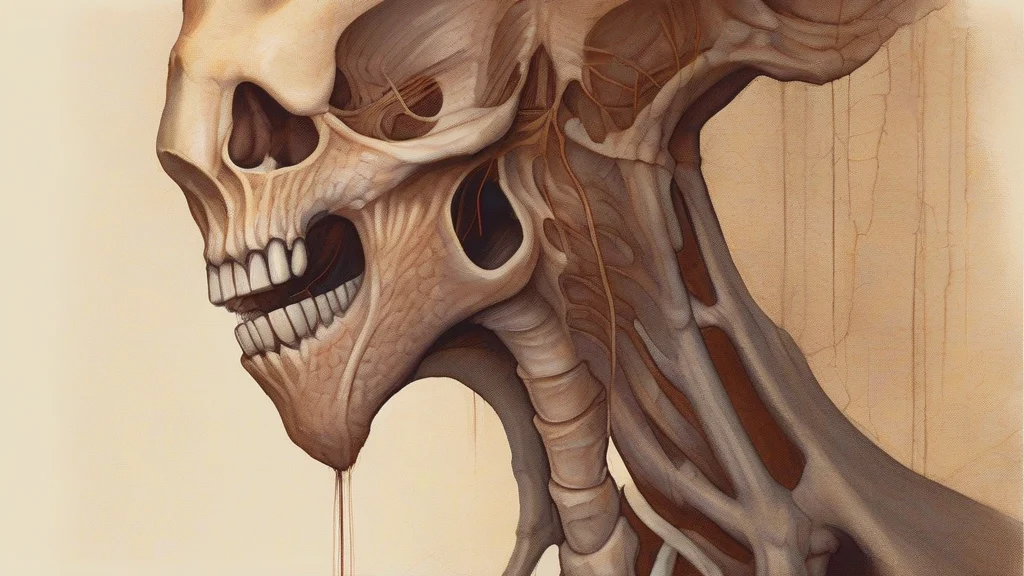
What does oropharynx mean?
The oropharynx is a vital part of the human respiratory and digestive systems, serving as a shared passageway for air, food, and fluids. Located behind the mouth, it extends from the hyoid bone to the cricoid cartilage and is a critical area for swallowing and breathing. The oropharynx is a common site for infections and diseases, such as tonsillitis and pharyngitis. Understanding the oropharynx and its functions is essential for medical professionals and individuals interested in human anatomy. The term is commonly used in medical and scientific contexts to describe this specific region of the throat.
nounThe oropharynx is the middle part of the pharynx, extending from the level of the hyoid bone to the inferior border of the cricoid cartilage, and is continuous with the laryngopharynx below and the nasopharynx above.
- The part of the pharynx that lies behind the mouth.
- The area of the throat that is shared by both the digestive and respiratory systems.
"The oropharynx is a critical area in the human body for swallowing and breathing."
"The oropharynx plays a crucial role in the process of swallowing."
"The doctor examined the patient's oropharynx to check for signs of infection."
The plural form is used when referring to multiple instances or parts of the oropharynx.
"The doctor examined the oropharynxes of several patients to compare their anatomy."
Reviewed by Deb Chak, Editor. AI-assisted content curated by RJS Tech Solutions LLP.
Etymology of oropharynx
The word oropharynx is derived from the Greek words 'oros', meaning 'mouth', and 'pharynx', meaning 'throat' or 'gullet'. The term has been used in medical and scientific contexts since the late 19th century to describe the middle part of the pharynx.
How oropharynx is actually used
The term oropharynx is primarily used in medical and scientific contexts.