
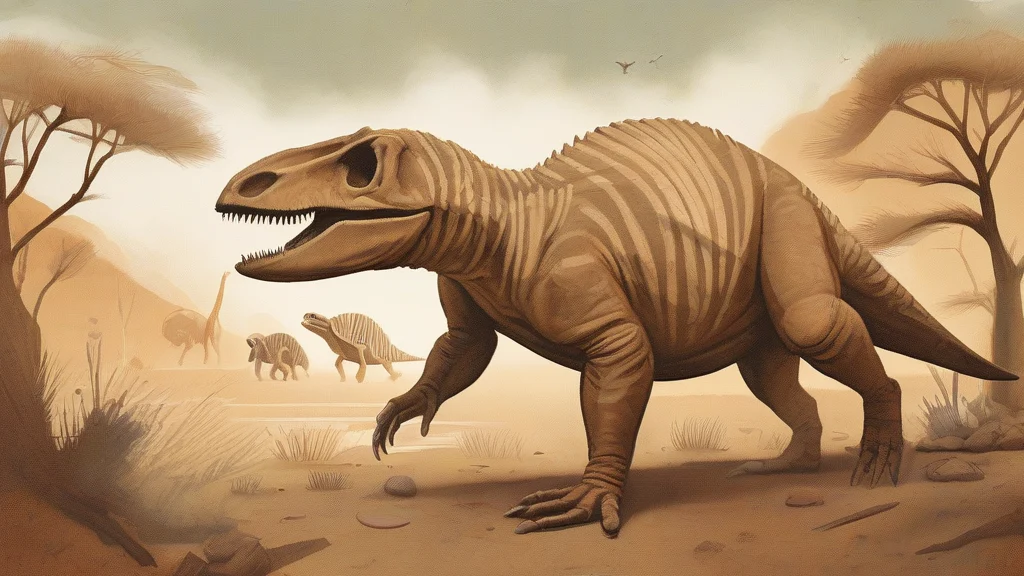
What does paleozoology mean?
Paleozoology is the branch of paleontology devoted to fossil animals. Paleontologists working in this field study fossilized remains such as bones, teeth, shells, and impressions to investigate the anatomy, evolution, ecology, behavior, and geographic distribution of animals in earlier geological periods. The discipline is closely associated with vertebrate paleontology and invertebrate paleontology, although those are branches or specializations within the broader field. Paleozoological evidence is frequently combined with geological and archaeological information to reconstruct ancient environments and the history of life. In scholarly writing, the term distinguishes animal-focused fossil research from paleontology in general, which also encompasses fossil plants and fungi. It is less familiar to general audiences than paleontology but useful for identifying research that concentrates on the history and evolution of animal life. The word combines the elements “paleo,” referring to the ancient past, and zoology, the scientific study of animals.
nounThe branch of paleontology concerned with fossil animals and the reconstruction of animal life in the geologic past. It uses animal fossils to study aspects of evolution, ecology, behavior, and the distribution of organisms through time.
- The scientific study of fossil animals and animal life in the geologic past.
"Researchers in paleozoology analyzed the fossil remains to reconstruct how the extinct species lived."
"The course introduces students to paleozoology and the methods used to interpret fossil vertebrates."
"New specimens have prompted a reassessment of ideas in paleozoology about the evolution of the species."
The plural is uncommon but regularly formed by adding -ies to the singular noun.
"The histories of paleozoologies in different regions remain incompletely documented."
Paleozoology turns ancient bones and shells into evidence of how extinct animals once lived, moved, and evolved.
Reviewed by Deb Chak, Editor. AI-assisted content curated by RJS Tech Solutions LLP.
Etymology of paleozoology
Paleozoology is an English compound formed from the combining form “paleo-,” derived from Greek palaios, meaning “old” or “ancient,” and “zoology,” from Greek zōion, meaning “animal,” and -logy, meaning the study of. Its development follows the established combination of a field marker with a biological discipline: paleontology identifies the fossil context, while zoology identifies the animal focus. The word is closely related to cognate scientific compounds such as paleontology and zoology, from the same Greek elements.
Related word forms
How paleozoology is actually used
This is a specialized scientific term and is less common than the broader word paleontology. It is especially appropriate when the emphasis is specifically on fossil animals rather than on fossils generally.
Easily confused with paleozoology
Paleontology is the broader study of fossils, including animal, plant, and fungal remains, whereas paleozoology focuses specifically on fossil animals.