What does politburo mean?
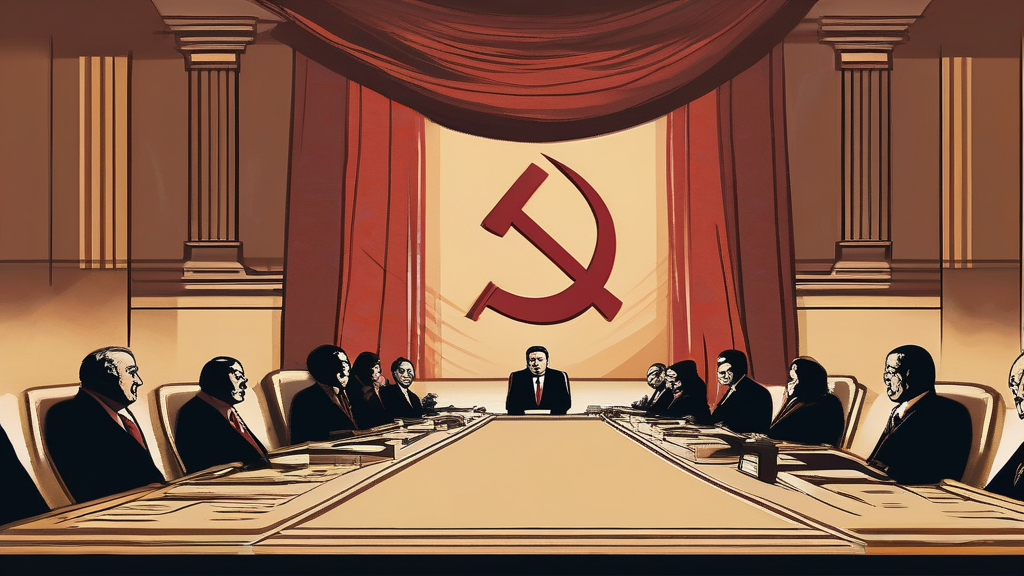
A politburo is the chief executive or governing committee of a communist party, composed of high-ranking officials who make key policy decisions. This committee plays a crucial role in the political hierarchy of communist or socialist systems, often shaping the future of the nation. The term is typically used in a formal or political context and is associated with influential decision-making bodies. The politburo's decisions can have far-reaching consequences, impacting various aspects of a country's development. Understanding the politburo's role is essential for grasping the inner workings of communist or socialist systems.
nounThe politburo is the chief executive or governing committee of a communist party, typically composed of high-ranking officials who make key policy decisions. It plays a crucial role in the political hierarchy of communist or socialist systems.
- A chief executive or governing committee of a communist party
- A high-ranking group making key policy decisions in a communist or socialist system
"The Soviet Union's politburo, led by Joseph Stalin, made pivotal decisions regarding the country's agricultural policies and industrialization plans."
"The Chinese Communist Party's politburo has significant influence over the country's economic reforms."
"The politburo's decisions often shape the future of the nation."
The plural form 'politburos' is used when referring to multiple governing committees or executive bodies.
"Several communist countries have their own politburos, each with distinct decision-making powers."
Reviewed by Deb Chak, Editor. AI-assisted content curated by RJS Tech Solutions LLP.
Etymology of politburo
The term 'politburo' originates from the German word 'Politbüro', which is a combination of 'politisch' (political) and 'Büro' (office or bureau). The term gained prominence during the Soviet era and has since been adopted into various languages to describe similar governing committees in communist or socialist parties.
How politburo is actually used
The term 'politburo' is often associated with communist or socialist systems and is typically used in a formal or political context.