
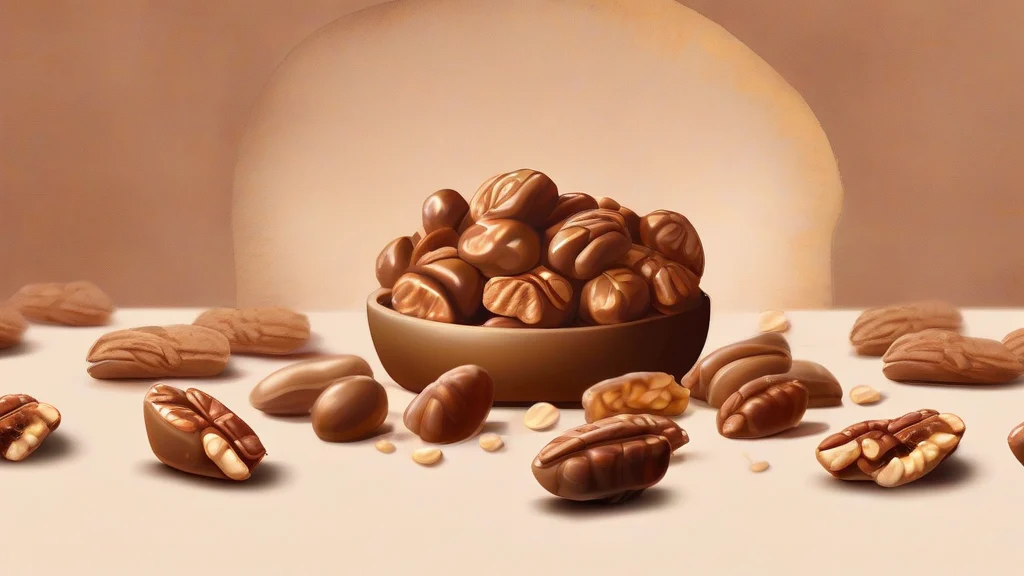
What does praline mean?
Praline is a confection of caramelized sugar and nuts, most often almonds or pecans. When properly made, the caramel coats the nuts in a thin, brittle shell; ground praline is also used as a filling, flavoring, or topping for chocolates, pastries, and ice cream. The term can further describe molded sugar decoration that imitates clusters of nuts, especially on wedding and celebration cakes. Praline differs from ordinary caramel because the caramelized sugar is combined with nuts, and it is generally thinner and more brittle than nougat. Its characteristic flavor combines deep caramel sweetness with the toasted aroma and slight bitterness of nuts. The word is also used more broadly for praline pastes and creams, whether homemade or commercially prepared. Familiar examples include French praline, praline crunch, and praline-filled chocolates.
nounA confection made by cooking sugar until caramelized and combining it with nuts, usually almonds or pecans. The word can also refer to this flavor or to decorative molded sugarwork resembling a nut-filled confection.
- A sweet confection made by caramelizing sugar and mixing it with ground or chopped nuts, especially almonds or pecans.
- A flavor, filling, or other preparation made with this confection.
- A molded decorative motif made from sugar, traditionally associated with celebratory and wedding cakes.
"The chocolates were finished with a delicate layer of crushed praline."
"She folded the praline into the buttercream to soften its sweetness."
"A delicate praline pattern encircled the top of the wedding cake."
Used when referring to individual praline sweets or separate decorative praline pieces.
"Small pralines filled the compartments of the chocolate box."
Praline transforms caramelized sugar and nuts into both a confection and a form of edible architecture.
Reviewed by Deb Chak, Editor. AI-assisted content curated by RJS Tech Solutions LLP.
Where does praline come from?
English borrowed the word from French praline, which originally referred to a nut confection. The French name is traditionally associated with the Marshal de La Tour d’Auvergne, also known as the Prince of Talmont, after whom the confection is said to have been named. From French, the word entered English in the eighteenth century and later became a general term for sweet fillings and decorative sugarwork.
Related word forms
How praline is actually used
In British and American English, praline is commonly used for a nut-and-caramel confection or preparations flavored with it. In decorative contexts, it may refer to intricate sugarwork modeled on the appearance of the confection.