
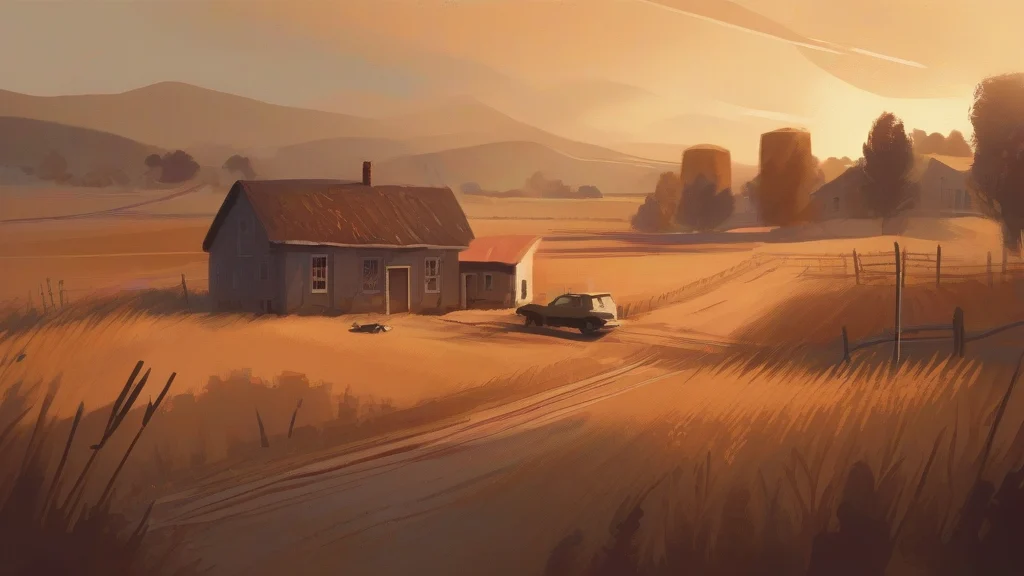
What does ruralizing mean?
Ruralizing describes the process of making a place, institution, or way of life more rural. It implies an active change: an urban district may be ruralized through new land-use policies, while depopulation or the decline of nearby industry may ruralize a region without a deliberate plan. The word is especially useful in urban planning, geography, economics, and social policy because it distinguishes changing rural character from the simple fact of being located in the countryside. Its connotation can vary. In architectural and development contexts, it may refer to an intentional design strategy that introduces open space, lower-density housing, agriculture, or natural landscapes. In demographic and economic discussions, it may describe depopulation and the withdrawal of urban services or employment. Ruralizing can therefore be either a planned transformation or the result of broader social and economic forces.
verbThe present participle of ruralize: making an area, settlement, institution, or way of life more rural in character.
- Making something more rural in character or less urbanized.
"The development plan focuses on ruralizing the former industrial district while preserving its historic buildings."
"The architects proposed ruralizing the development by replacing dense housing with gardens and low-rise buildings."
"Depopulation was gradually ruralizing the region and altering its local economy."
Ruralizing names the moment a place begins to look less like a city and more like the countryside.
Reviewed by Deb Chak, Editor. AI-assisted content curated by RJS Tech Solutions LLP.
Where does ruralizing come from?
The verb was formed in English by adding the suffix “-ize” to “rural.” The adjective “rural” came through Old French from Latin ruralis, which was derived from rus, ruris, meaning “country” or “countryside.” The same Latin root also produced words such as “rustic” and “rusticity.”
Related word forms
How ruralizing is actually used
The “-izing” spelling is standard in American English, while British English commonly uses “-ising.” The word is often used in urban planning, geography, and discussions of population movement; it can suggest either a deliberate policy or an unintended economic and demographic transition.