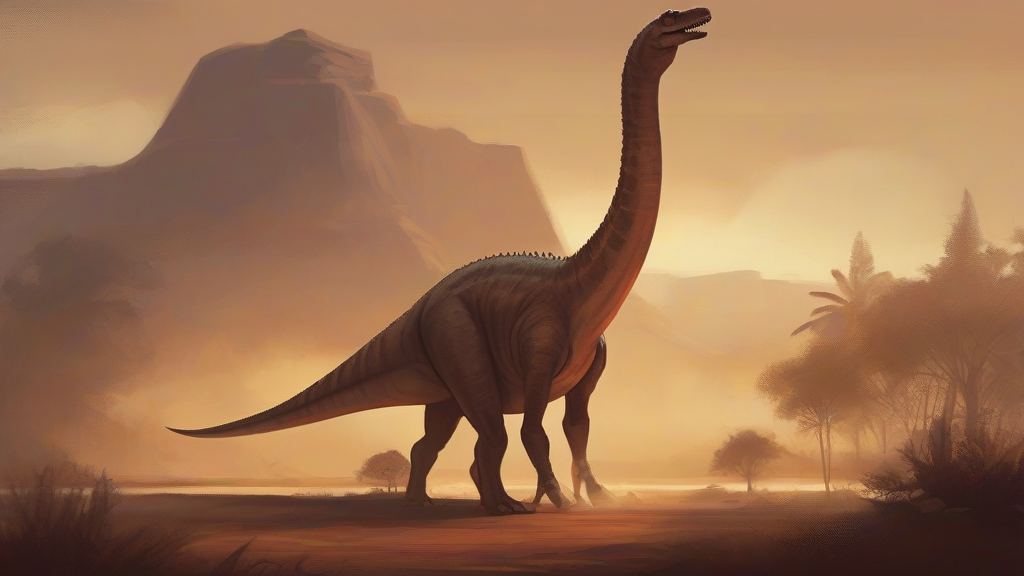
What does sauropod mean?
The term 'sauropod' refers to a group of herbivorous dinosaurs characterized by their long necks and tails, and small heads. These massive creatures were among the largest land animals to have ever existed, with some species reaching lengths of over 30 meters. Sauropods were a diverse group, with many different species found in different parts of the world. They were likely herbivores, feeding on plants and fruits. The study of sauropods has provided valuable insights into the evolution of life on Earth, and their fossils continue to fascinate scientists and the general public alike. The term 'sauropod' is derived from the Greek words 'saurus' meaning lizard and 'pod' meaning foot, reflecting their distinctive foot structure. Sauropods are an important part of our understanding of the history of life on Earth, and their study continues to be an active area of research.
nounA type of herbivorous dinosaur characterized by a long neck and tail, and a small head. Sauropods were among the largest land animals to have ever existed, with some species reaching lengths of over 30 meters.
- A type of herbivorous dinosaur characterized by a long neck and tail, and a small head.
"The sauropod fossils found in the Jurassic period are a testament to the diversity of life on Earth millions of years ago."
"The sauropod fossils found in the Jurassic period are a testament to the diversity of life on Earth millions of years ago."
"The long neck of the sauropod allowed it to reach high into the trees to feed on leaves."
Reviewed by Deb Chak, Editor. AI-assisted content curated by RJS Tech Solutions LLP.
Etymology of sauropod
The term 'sauropod' is derived from the Greek words 'saurus' meaning lizard and 'pod' meaning foot, reflecting their distinctive foot structure. The name was first used by the German paleontologist Hermann von Meyer in 1837 to describe a group of long-necked, herbivorous dinosaurs.
Usage notes
The term 'sauropod' is typically used in a formal or scientific context to refer to these herbivorous dinosaurs. It is not commonly used in everyday language, but is an important term in the field of paleontology.