What does seagull mean?
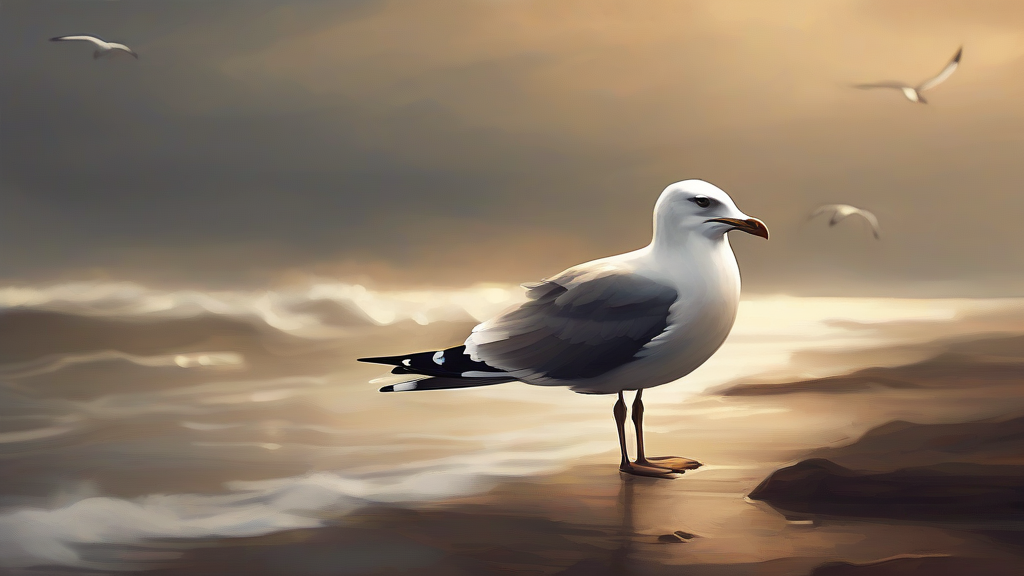
Seagulls are large seabirds with distinctive grey and white bodies, black wing tips, and sharp beaks. They are known for their scavenging behavior and are often found near coastal areas, where they feed on fish, crustaceans, and other small animals. Seagulls are opportunistic feeders and will eat a wide variety of foods. They are also known to be aggressive when defending their young. Despite their reputation as pests, seagulls play an important role in the ecosystem, serving as both predators and prey for other animals. They are a common sight in coastal areas and are often associated with the beach and the sea.
nounA large seabird with a distinctive appearance, typically with a grey and white body, black wing tips, and a sharp beak. Seagulls are known for their scavenging behavior and are often found near coastal areas, where they feed on fish, crustaceans, and other small animals.
- A large seabird with a distinctive appearance, typically with a grey and white body, black wing tips, and a sharp beak.
"The seagull swooped down to steal a French fry from a tourist's hand."
"The seagull swooped down to steal a French fry from a tourist's hand."
"Seagulls are known to be aggressive when defending their young."
The plural form of seagull is used to refer to multiple birds, and is often used in informal contexts.
"A flock of seagulls flew overhead."
Reviewed by Deb Chak, Editor. AI-assisted content curated by RJS Tech Solutions LLP.
Etymology of seagull
The word 'seagull' is derived from the Old English words 'sæ' meaning 'sea' and 'gull' meaning 'gull'. The term has been in use since the 14th century and refers to a variety of seabirds that are found in coastal areas. The etymology of the word is closely tied to the bird's habitat and behavior, which is characterized by its scavenging and opportunistic feeding habits.
Usage notes
Seagulls are often associated with coastal areas, but they can also be found in inland regions, particularly near bodies of water. They are known to be opportunistic feeders and will eat a wide variety of foods, including fish, crustaceans, and small animals.