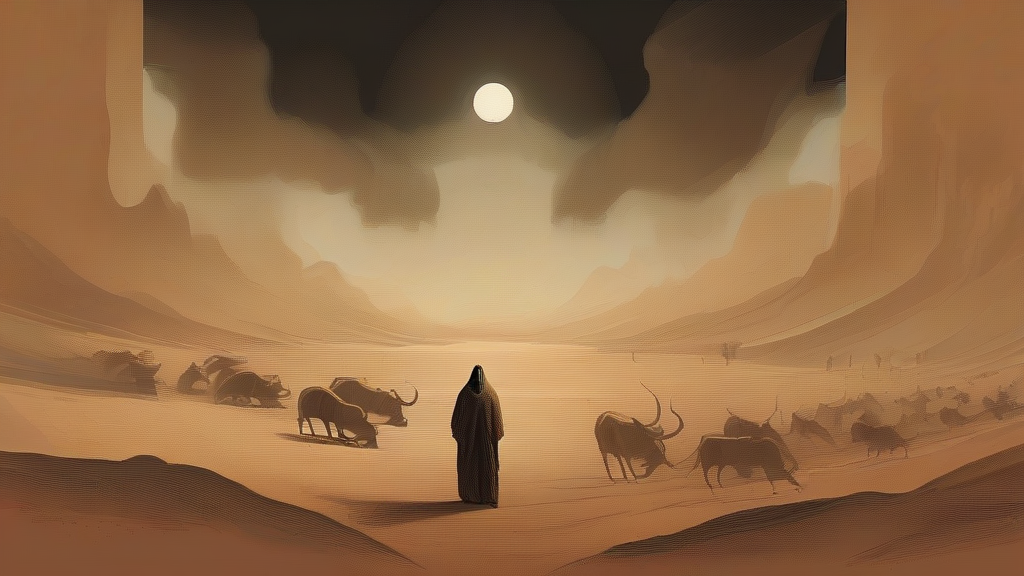
What does shaitan mean?
Shaitan is a term used in Islamic theology to refer to the devil or Satan, the primary antagonist who tempts humans to commit evil. It can also describe any evil spirit or unclean entity. The concept of shaitan is deeply rooted in Islamic cosmology and is often referenced in the Quran and other Islamic texts. Understanding shaitan is essential to grasping Islamic views on good and evil, free will, and the nature of humanity. The term is used across various Muslim cultures, often carrying specific connotations and associations. In discussions of morality and ethics, shaitan serves as a symbol of evil and temptation.
nounIn Islamic theology, shaitan refers to the devil or Satan, the primary antagonist in Islamic cosmology. It can also refer to any evil spirit or unclean entity.
- The devil or Satan in Islamic theology
- Any evil spirit or unclean entity
"The imam warned his congregation to beware of the whispers of shaitan during Ramadan."
"The Quran describes shaitan as a tempter who leads humans astray."
"In some cultures, shaitan is believed to possess individuals, causing madness or evil behavior."
Used to describe multiple evil spirits or entities
"The villagers believed that the forest was inhabited by many shaitans."
Reviewed by Deb Chak, Editor. AI-assisted content curated by RJS Tech Solutions LLP.
Etymology of shaitan
The term 'shaitan' originates from Arabic, where it is written as 'شيطان'. It is derived from the root 'ش-ي-ط' which means 'to astray' or 'to deviate'. In Islamic theology, shaitan is seen as the primary antagonist who leads humans astray from the right path. The term has been adopted into various languages, including English, and is used in discussions of Islamic theology and culture.
Usage notes
Shaitan is often used interchangeably with 'devil' or 'Satan', but it carries specific connotations in Islamic theology and culture. It can be used to describe both the primary antagonist and various lesser evil spirits.