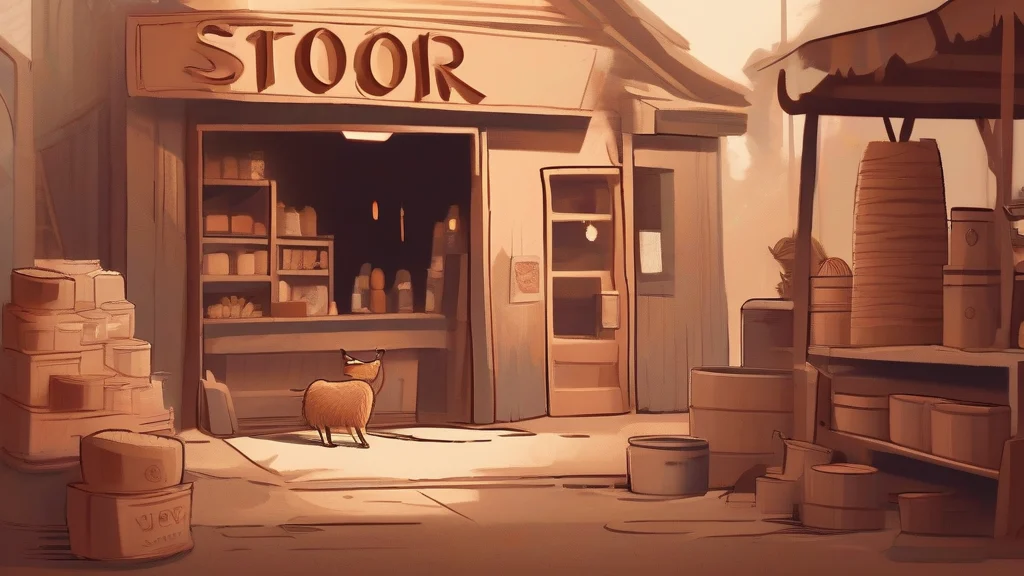
What does stoor mean?
Stoor refers to a store or hoard of something, especially food or supplies. It can also be used to refer to a cache of goods or materials. In British English, 'stoor' is often used to refer to a store or hoard of food or supplies, especially in rural areas. The word is derived from the Old Norse word 'stórr', meaning 'great' or 'large'. Stoor can be used in a variety of contexts, including in reference to food, supplies, or materials. It is often used in rural areas or in situations where a store or hoard of goods is necessary. The word has a strong connotation of abundance and provision. In some cases, 'stoor' can be used to refer to a store or hoard of intangible things, such as knowledge or skills. However, this usage is less common. Overall, 'stoor' is a useful word for describing a store or hoard of something, especially in situations where a large quantity of goods is necessary.
nounA store or a hoard of something, especially food or supplies.
- A store or a hoard of something, especially food or supplies.
"The villagers had a stoor of dried fish and berries to last them through the winter."
"The villagers had a stoor of dried fish and berries to last them through the winter."
"The family kept a stoor of toys and games for their children to play with."
The plural form 'stoors' is used to refer to multiple stores or hoards of something.
"The family had several stoors of food and supplies to last them through the winter."
Reviewed by Deb Chak, Editor. AI-assisted content curated by RJS Tech Solutions LLP.
Etymology of stoor
The word 'stoor' is derived from the Old Norse word 'stórr', meaning 'great' or 'large'. This word was brought to the British Isles by Viking invaders and has since been adopted into the English language. In Old Norse, 'stórr' was used to describe something that was large or great in size or quantity. Over time, the word 'stoor' evolved to refer specifically to a store or hoard of something, especially food or supplies.
How stoor is actually used
In British English, 'stoor' is often used to refer to a store or hoard of food or supplies, especially in rural areas. It can also be used to refer to a cache of goods or materials.