
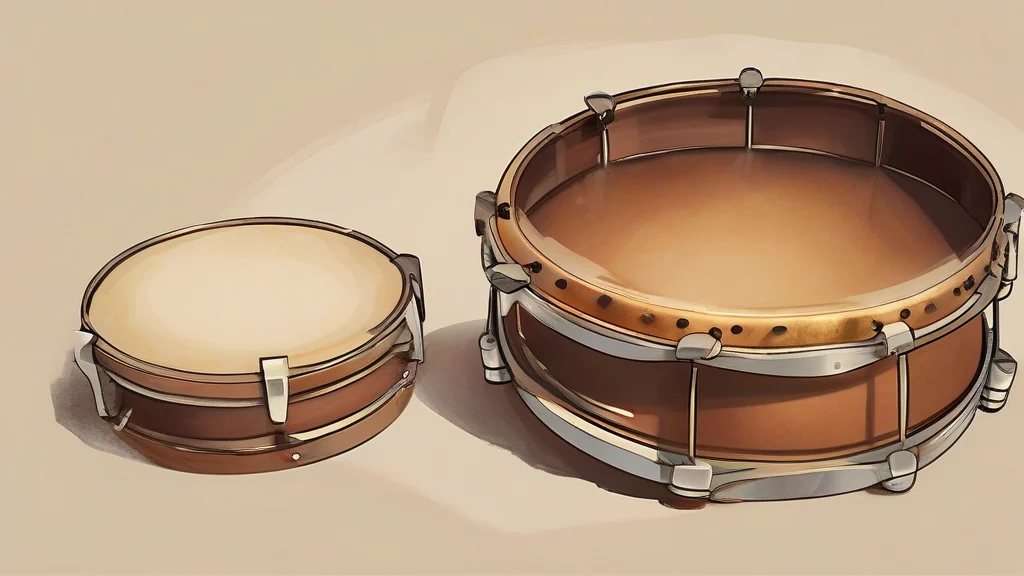
What does tambourine mean?
A tambourine is a small percussion instrument consisting of a drumhead stretched over a rigid frame with metal jingles set into its edges. The player usually holds it in one hand and shakes or strikes it, producing a bright, shaking sound as the jingles collide. Its simple construction makes it especially common in folk, popular, children's, religious, and traditional music, although it also appears in orchestral and contemporary compositions. In phrases such as "shake the tambourine" and "play the tambourine," the word names both the instrument and the characteristic action associated with it. The word is also used more broadly for a tambourine-like percussion instrument in descriptions of historical or folk performances. Though its sound can be energetic and attention-grabbing, the instrument is often associated with communal celebration, accompaniment, and an uncomplicated rhythmic pulse. Its name reflects its history as a small drum, while its distinctive rattling tone comes from the metal jingles rather than from the drumhead alone.
nounA small hand-held percussion instrument consisting of a drumhead stretched over a rigid frame, with metal jingles set into the frame. It is sounded by shaking or striking it.
- A small hand percussion instrument with a drumhead stretched over a frame containing metal jingles.
"She played the tambourine while the rest of the band kept time."
"The child shook the tambourine in time with the song."
"The tambourine provided a bright rhythmic accompaniment to the folk melody."
The standard plural is tambourines.
"Two tambourines added a lively rhythm to the performance."
A tambourine's distinctive shimmer comes from small metal jingles that rattle whenever its frame is shaken.
Reviewed by Deb Chak, Editor. AI-assisted content curated by RJS Tech Solutions LLP.
Where does tambourine come from?
The word entered English from French tambourine, a diminutive form of tambour, meaning "drum." French tambour developed through Medieval Latin tamborinum, which is generally traced to Arabic ṭunbūr and ultimately Persian tanbur, names associated with a drum or stringed instrument. English has also adopted related forms such as tambour and tambourin, reflecting the word's long history across European languages.
How tambourine is actually used
Tambourine is a general noun and is not normally restricted to one musical tradition. In religious and folk contexts, it may denote a percussion instrument used to accompany singing, dancing, or procession.
Easily confused with tambourine
A tambour is a drum, while a tambourine is a shallow frame drum fitted with metal jingles and is usually held in one hand.