
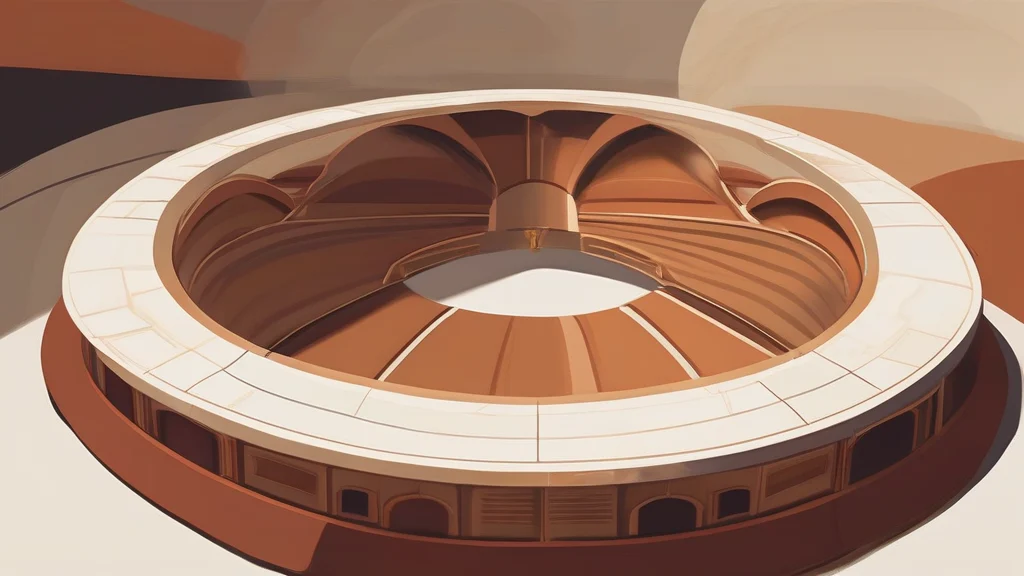
What does tondo mean?
A tondo is a circular or oval shape, often used in art and architecture to describe a circular composition or a circular architectural feature. The term is derived from the Italian word 'tondo', meaning 'round' or 'circular'. In art and architecture, the tondo is often used to evoke a sense of unity and wholeness. It is a formal term and is not commonly used in everyday conversation. The tondo has been used in various forms of art and architecture throughout history, from ancient Greek and Roman architecture to modern art movements. The term is often used to describe a circular composition or a circular feature, such as a dome or a rotunda. The tondo is a versatile term that can be used to describe a wide range of artistic and architectural features. It is a useful term for art historians and architects to describe a circular composition or a circular feature. The tondo is a term that is steeped in history and culture, and it continues to be used in art and architecture today.
nounA tondo is a circular or oval shape, often used in art and architecture to describe a circular composition or a circular architectural feature, such as a dome or a rotunda.
- A circular or oval shape, often used in art and architecture.
"The artist's use of a tondo in her latest sculpture was a deliberate choice to evoke a sense of unity and wholeness."
"The tondo in the painting was a beautiful example of Renaissance art."
Reviewed by Deb Chak, Editor. AI-assisted content curated by RJS Tech Solutions LLP.
Etymology of tondo
The term tondo is derived from the Italian word 'tondo', meaning 'round' or 'circular'. The word 'tondo' is thought to be derived from the Latin word 'tondus', meaning 'rounded' or 'circular'. The term tondo has been used in art and architecture since the Renaissance, and it has been used to describe a wide range of circular compositions and features.
How tondo is actually used
In art and architecture, the term tondo is often used to describe a circular composition or a circular feature, such as a dome or a rotunda. It is a formal term and is not commonly used in everyday conversation.