
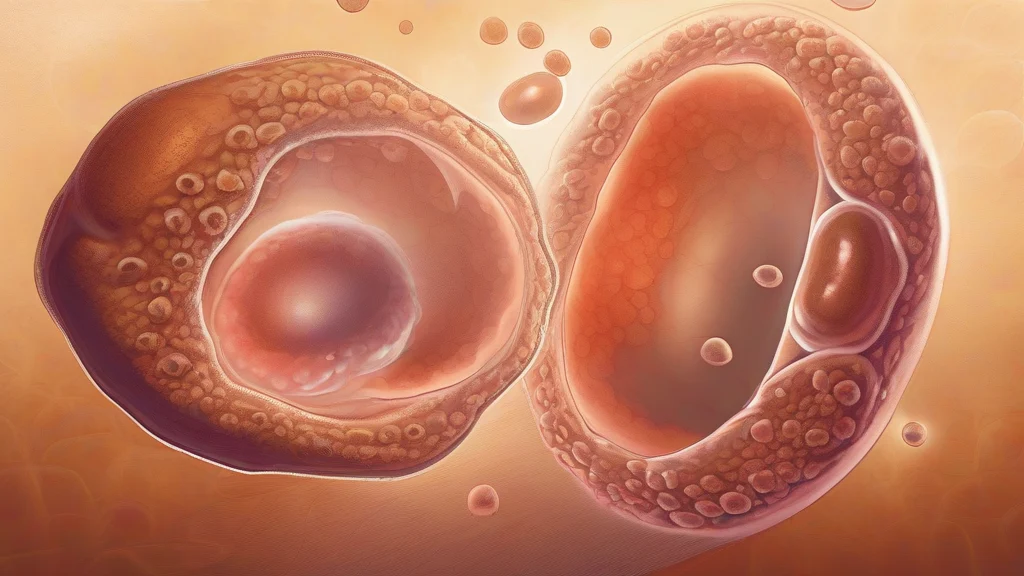
What does trophoblast mean?
The trophoblast is the outer cell layer of a mammalian blastocyst, the early embryo structure that implants in the uterus. It attaches to the uterine lining, invades the maternal tissue, and helps establish the pregnancy. Its cells contribute to the chorion and the fetal portion of the placenta, while other embryonic tissues form the embryo itself. Because implantation and placental development are crucial to pregnancy, the trophoblast is central to research in reproductive biology, developmental biology, and medicine. The word is specialized rather than everyday, but it names an important boundary between the developing embryo and the maternal environment. Its two components reflect its biological role: Greek roots referring to nourishment or growth and the germ or sprout that develops into the early embryo.
nounIn mammalian embryology, the outer cell layer of the blastocyst that contributes to the chorion and fetal part of the placenta and mediates attachment to and invasion of the uterine lining. It does not form the embryo proper.
- The outer cell layer of a mammalian blastocyst that contributes to the chorion and fetal part of the placenta and helps establish implantation in the uterine lining.
"The trophoblast attached to the uterine lining and began the process of implantation."
"The trophoblast attached to the uterine lining and began the process of implantation."
"Researchers studied how trophoblast cells respond to the maternal environment during early pregnancy."
The plural is used when referring to multiple trophoblast cells, layers, or populations.
"Trophoblasts at the implantation site interact closely with cells of the uterine lining."
The trophoblast is the blastocyst’s outer layer—the first embryonic tissue to greet the uterine wall and begin implantation.
Reviewed by Deb Chak, Editor. AI-assisted content curated by RJS Tech Solutions LLP.
Where does trophoblast come from?
The term dates from the late 19th century and combines Greek roots associated with nourishment or growth and the germ or sprout that develops into the early embryo. It was formed as a specialized embryological name from the same Greek elements found in words such as trophic, trophism, blastula, and blastomere. The compound was coined to describe the blastocyst’s outer layer and its role in establishing the embryo’s connection with the uterus.
Related word forms
How trophoblast is actually used
A technical term used chiefly in developmental biology, reproductive medicine, and related research; it is not normally part of general English.