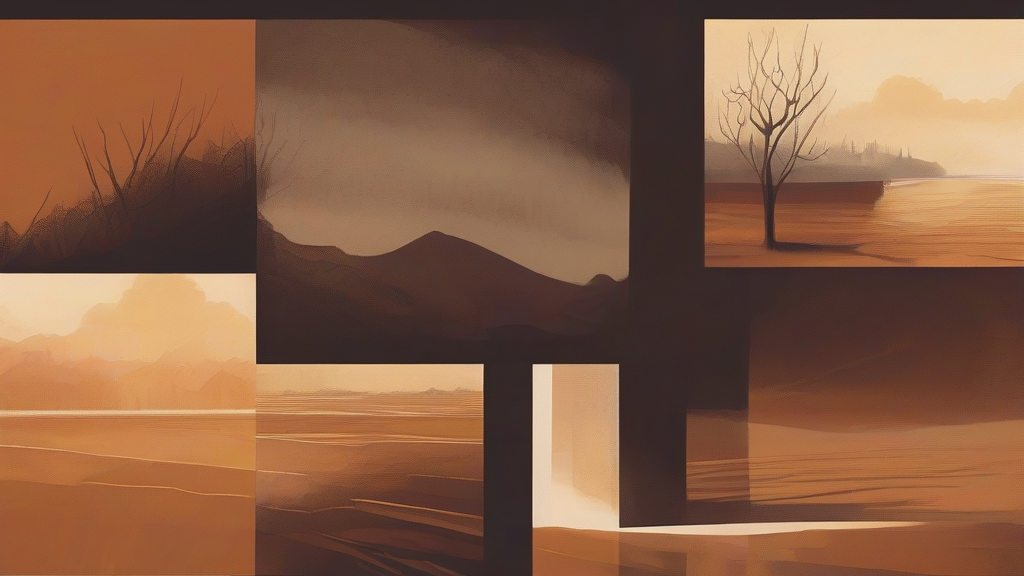
What does unclarity mean?
Unclarity refers to a lack of clearness or distinctness, often resulting in obscurity or vagueness. This concept can be applied to various contexts, including language, art, and politics. In language, unclarity can manifest as ambiguity or equivocation, making it difficult to understand the intended meaning. In art, unclarity can be a deliberate choice, adding complexity and depth to a piece. In politics, unclarity can be a tactic used to avoid taking a clear stance or to obscure one's intentions. Overall, unclarity is a multifaceted concept that can have different implications depending on the context in which it is used.
nounA lack of clearness or distinctness; obscurity or vagueness.
- A lack of clearness or distinctness; obscurity or vagueness.
"The ambiguity of the artist's statement added to the unclarity of the painting's meaning."
"The artist's use of abstract shapes added to the unclarity of the painting's meaning."
"The politician's unclear stance on the issue led to widespread confusion."
Reviewed by Deb Chak, Editor. AI-assisted content curated by RJS Tech Solutions LLP.
Etymology of unclarity
The word 'unclarity' is derived from the prefix 'un-' meaning 'not' and the word 'clarity' meaning 'clearness' or 'distinctness'. The term has been in use since the 15th century and has evolved to encompass a range of meanings related to a lack of clearness or distinctness.
Usage notes
Unclarity can be used to describe a lack of clearness or distinctness in various contexts, including language, art, and politics. It can also imply a sense of obscurity or vagueness.