
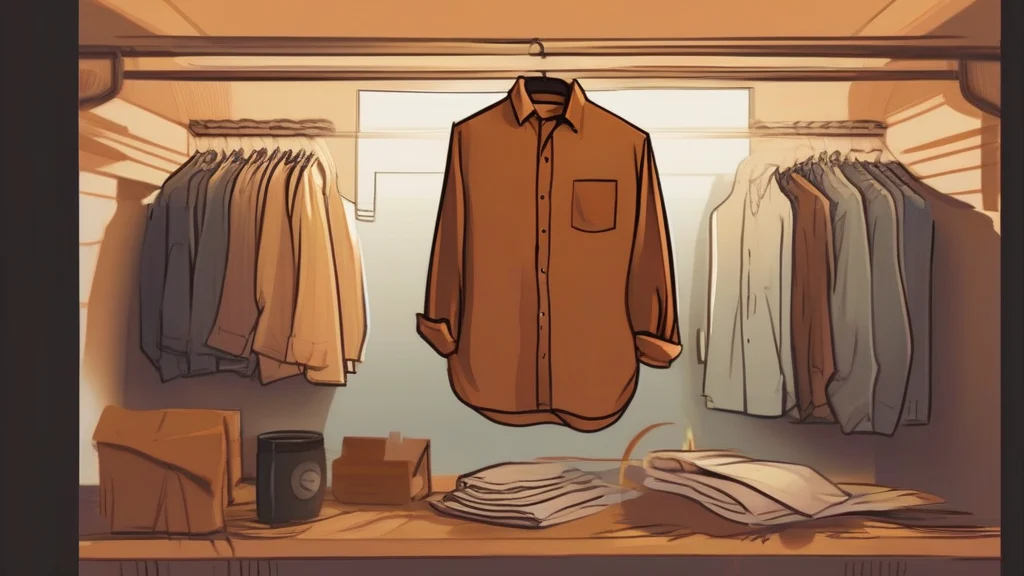
What does untuck mean?
Untuck is a verb meaning to reverse the action of folding or securing something in a tuck. It is especially common in reference to clothing and bedding: a person may untuck a shirt from a waistband or release the folded edges of a sheet. The action can be transitive, with the tucked object as its object, or intransitive, as when someone moves out from under tightly arranged covers. Untuck is neutral in register and familiar in everyday speech in both British and American English. Unlike the broader “unfold,” it implies undoing a fold or placement that was intentional and relatively compact. The word is useful when precision matters: it distinguishes freeing fabric from a tucked position from opening a general package, flattening an entirely unfolded garment, or loosening a fastening. Though it describes a modest practical action, untuck names that action clearly and naturally.
verbTo undo a tuck or fold in clothing, bedding, or similar material, returning it to a looser position; also, to move or come out from a tucked position.
- To undo a tuck or fold in clothing, bedding, or similar material.
- To move or come out from a tucked position.
"She smoothed his shirt and untucked it from his waistband."
"She untucked the linen sheets before folding the quilt."
"He smoothed his shirt and untucked it from his waistband."
From shirt tails to bed linen, untuck does the precise job that the broader word “unfold” cannot.
Reviewed by Deb Chak, Editor. AI-assisted content curated by RJS Tech Solutions LLP.
Where does untuck come from?
English untuck was formed by combining the prefix un- with tuck, the older verb meaning “to fold or draw together.” The construction was recorded by the early nineteenth century and reverses the action of tucking, much as unpack reverses packing. Related forms include tuck, tucking, and tucker; the latter developed from tuck in senses connected with arranging folds and decorative garments.
Related word forms
How untuck is actually used
Neutral and familiar in everyday speech in both British and American English. It usually describes undoing a deliberate fold or compact placement, especially in clothing or bed linen; “unfold” is broader and less specific.