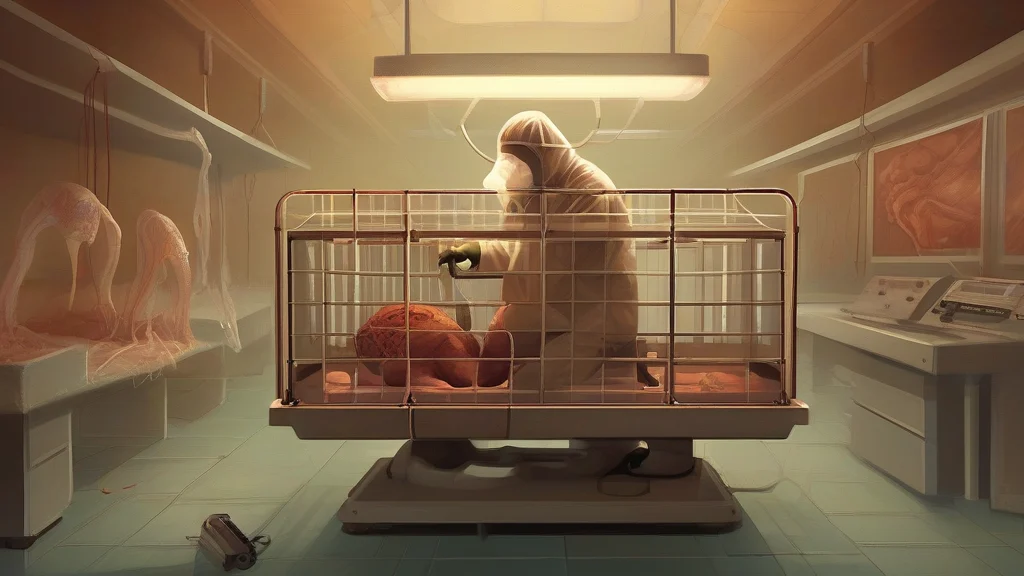
What does vivisecting mean?
Vivisecting refers to the practice of surgically dissecting or cutting into a living organism, typically an animal, for scientific or educational purposes. This term is often associated with controversy and criticism, as it can involve causing pain and suffering to the animals being dissected. Vivisecting is sometimes used in medical and scientific research, as well as in educational settings to teach anatomy and surgical techniques. However, many people object to vivisecting on ethical grounds, arguing that it is cruel and inhumane. As a result, the term is often used in a critical or disapproving context.
verbThe act of performing vivisection, which is the practice of surgically dissecting or cutting into a living organism, typically an animal, for scientific or educational purposes.
- The act of performing vivisection.
- The practice of dissecting living organisms.
"The researchers were accused of vivisecting animals in their laboratory without proper anesthesia."
"The scientists were criticized for vivisecting animals in their research."
"The medical students were required to observe vivisecting procedures as part of their training."
Reviewed by Deb Chak, Editor. AI-assisted content curated by RJS Tech Solutions LLP.
Etymology of vivisecting
The term vivisecting originates from the Latin words 'vivus,' meaning 'alive,' and 'sectio,' meaning 'cutting.' The practice of vivisection dates back to ancient times, but the term vivisecting emerged in the 17th century to describe the specific act of dissecting living organisms.
How vivisecting is actually used
This term is often used in a critical or disapproving context, implying cruelty or unnecessary suffering to animals.