
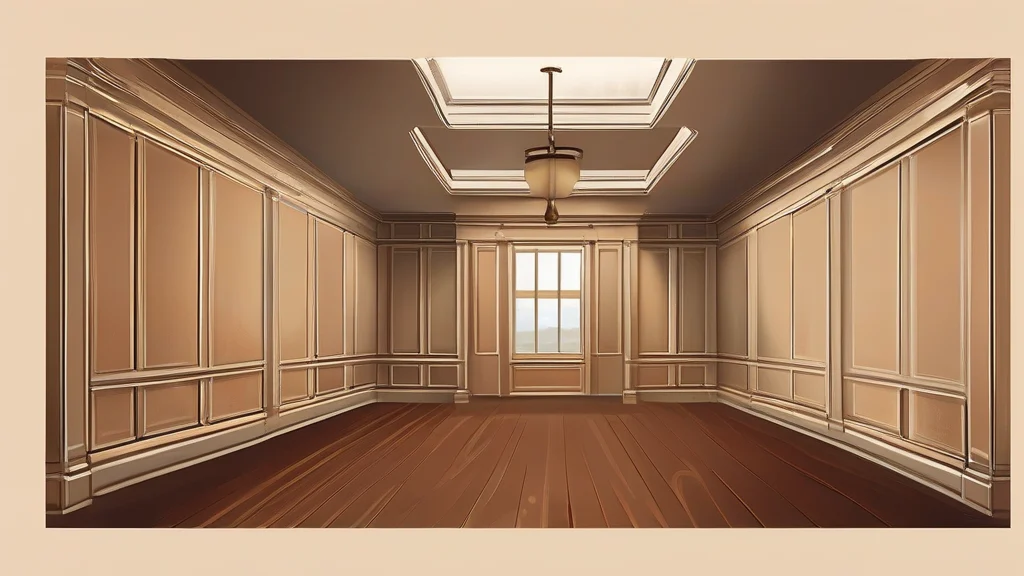
What does wainscot mean?
A wainscot is the wooden paneling that covers the lower part of an interior wall, often stopping at roughly chair-rail height. It has traditionally been made from boards or panels and may be painted, stained, or finished to display the grain of the wood. In modern British and American usage, wainscot usually refers collectively to this architectural treatment, while wainscoting can emphasize the material, the panels, or the work of installing them. The word can also function as a verb, as in a room that was wainscoted in oak. Although associated with traditional interiors, wainscot occurs in many periods and styles, from historic houses to formal offices and contemporary homes. Its appeal lies partly in its visual solidity: it gives a room a finished lower boundary while protecting the wall beneath. The term is more specialized than paneling or wall covering because it ordinarily denotes a distinctly wooden architectural feature rather than paint, fabric, wallpaper, or other finishes.
Wooden paneling that lines the lower portion of an interior wall; also an individual board or panel forming part of such a lining.
"A narrow band of white wainscot runs beneath the windows."
The word is commonly used for traditional timber paneling, including painted and stained examples.
To line the lower portion of a wall with wooden panels or another solid material.
"They wainscotted the dining room in dark oak."
The verb is most natural when describing the installation of paneling and is less common in casual speech.
The plural is used when referring to individual wall panels or separate paneled sections; for the paneling of a whole wall, wainscoting is usually more natural.
"The carpenter replaced two damaged wainscots beneath the windows."
Wainscot is the wooden "armor" along a room's lower walls—a practical feature that has become an elegant architectural signature.
Reviewed by Deb Chak, Editor. AI-assisted content curated by RJS Tech Solutions LLP.
Etymology of wainscot
The word entered English in the early 17th century from a Dutch form commonly given as wagenschot or wainschot. That compound was historically associated with a wagon and wooden boarding or planking. Its relatives include the German Wainschot and the Afrikaans wainskot, both of which continue the older sense of wooden paneling.
Related word forms
How wainscot is actually used
In contemporary interior design, the word is chiefly British and American and usually refers to substantial wooden paneling rather than a thin decorative wall covering. It can be used collectively or countably for individual panels, although wainscoting is more natural when emphasizing the material or the complete installation.
Easily confused with wainscot
Wainscot names the finished wooden paneling or a component of it, whereas wainscoting usually denotes the material, paneling, or process as a whole.