
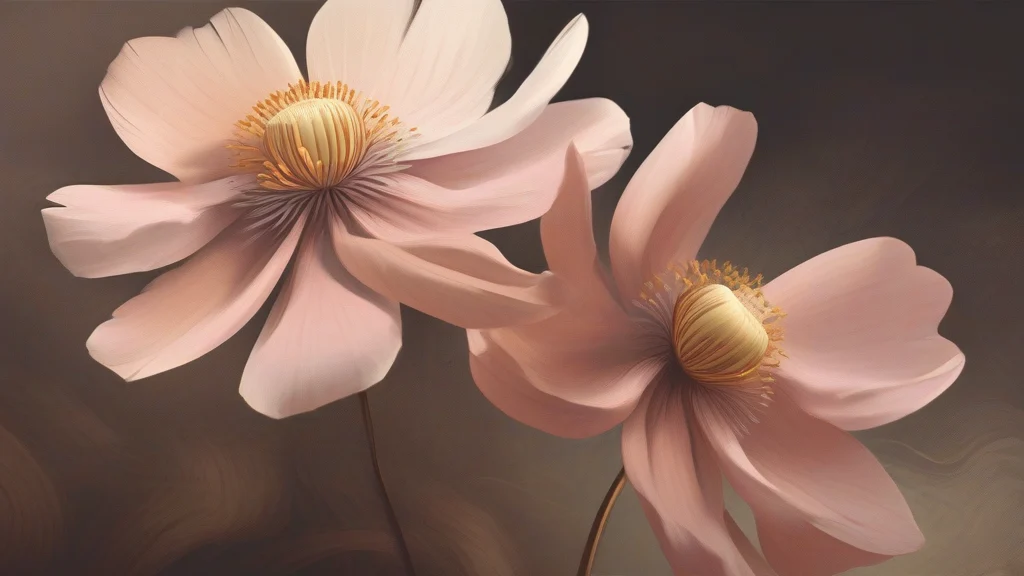
What does windflower mean?
Windflower is an old English name for an anemone, particularly the delicate wood anemone that flowers in spring. The word has a strongly literary and poetic character, so it often appears in descriptions of woods, hillsides, gardens, and rural landscapes rather than in ordinary botanical discussion. Its gentle sound and association with a fleeting woodland bloom make it especially effective in verse and imaginative prose. Although the name is formed from “wind” and “flower,” its exact historical association with the wind should not be treated as a firmly established botanical explanation. For most practical purposes, “anemone” is the clearer and more standard modern term, but “windflower” remains a memorable example of the poetic vocabulary preserved in English.
nounAn archaic or poetic name for an anemone, especially the wood anemone, a spring-blooming plant of the buttercup family.
- An archaic or poetic name for an anemone, especially the wood anemone (Anemone nemorosa).
"A single windflower opened beneath the sheltering branches of the old oak."
"In the wood, a windflower opened beneath the sheltering branches of the old oak."
"The poet described the hillside as sprinkled with windflowers, though a botanist would have called them anemones."
The standard plural is “windflowers.”
"Several windflowers grew along the shaded edge of the path."
Windflower gives the familiar spring anemone an old poetic air, turning a woodland bloom into something that sounds almost like a character from a ballad.
Reviewed by Deb Chak, Editor. AI-assisted content curated by RJS Tech Solutions LLP.
Where does windflower come from?
The word is an English compound of “wind” and “flower,” and it has been used in English for anemones since an early period. The related botanical term “anemone” comes from Greek, where it is associated with ánemos, meaning “wind.” The precise reason that the English compound was applied to the plant is not entirely certain, so the name should be understood primarily as an established traditional designation.
Related word forms
How windflower is actually used
The word is literary, poetic, and somewhat archaic. In modern botanical and general contexts, “anemone” is the usual term.