
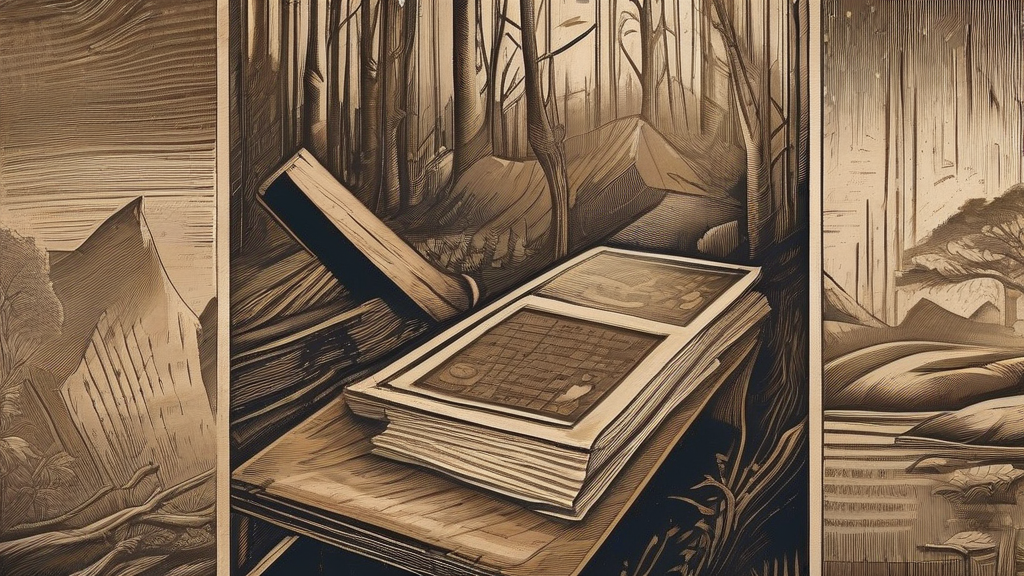
What does xylography mean?
Xylography is the art and technique of producing prints from images cut in relief on wooden blocks. The term is closely associated with woodcut and wood engraving, in which areas left untouched on the block print as white while inked, raised areas transfer their image to paper. Xylography became an important part of the history of printmaking, particularly in the production of book illustrations, posters, and other graphic works. Today, it is mainly encountered in museums, art history, and descriptions of traditional printmaking processes. For a general reader, the word offers a precise way to distinguish making or printing from a carved wooden block from the broader activity of drawing, painting, or even producing a woodcut print. Its Greek-derived name reflects the basic materials involved: “wood” and “writing” or drawing.
nounThe art or process of making prints from designs cut in relief on wooden blocks. It is especially associated with woodcut and wood engraving.
- The art or technique of making prints from images cut into wooden blocks.
"The museum's exhibition explores the role of xylography in the history of printmaking."
"The printmaker learned xylography from a master wood engraver."
"Its bold contrasts and fine tonal range make xylography especially effective for illustrations and decorative prints."
The plural is grammatically possible but uncommon; xylography is ordinarily used as an uncountable noun.
"The collection includes xylographies depicting animals and botanical subjects."
Literally meaning “wood-writing,” xylography turns carved wooden blocks into images that can be printed in multiples.
Reviewed by Deb Chak, Editor. AI-assisted content curated by RJS Tech Solutions LLP.
Etymology of xylography
The English word comes through French xylographie from Greek xylon, meaning “wood,” and graphein, meaning “to write” or “to draw.” It became established in nineteenth-century English in discussions of wood engraving and printmaking, and its modern sense covers both the technique and the wider artistic practice associated with it. Related English words such as xylophone and xylem also derive from Greek xylon, although their meanings are unrelated to printmaking.
Related word forms
How xylography is actually used
A specialized art-historical and printmaking term, usually used in formal or technical contexts. It normally denotes the process or wider art rather than a single print, though related terms such as “woodcut” can refer to an individual impression.
Easily confused with xylography
Xylography is a printmaking technique involving wood, whereas a xylophone is a musical instrument whose wooden bars are struck to produce notes.