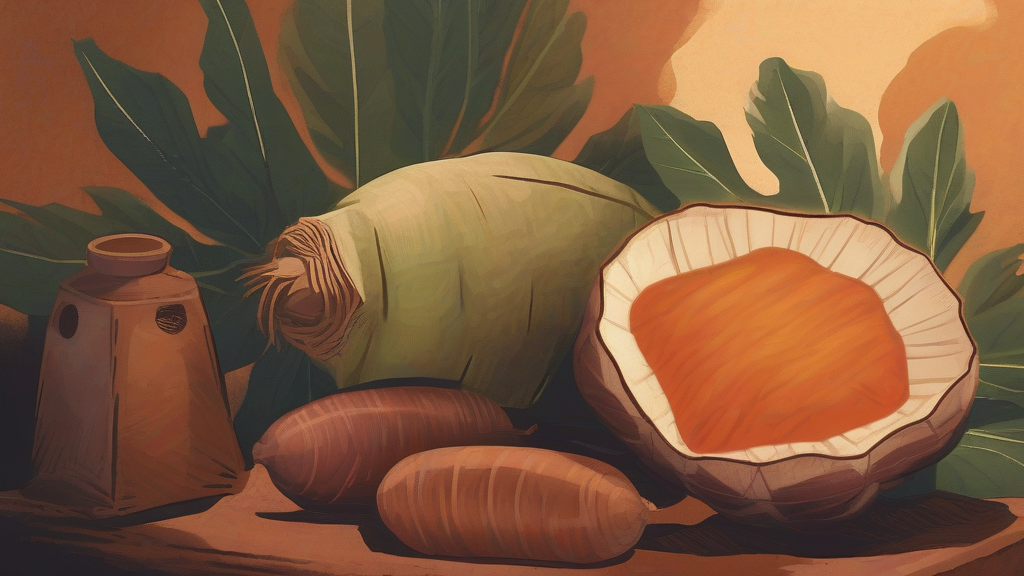
What does yautia mean?
Yautia, also known as malanga or cocoyam, is a type of root vegetable native to Central and South America. It has a unique flavor and texture, making it a staple food in many Latin American and Caribbean countries. Yautia is often used in soups, stews, and side dishes, and is a good source of fiber, vitamins, and minerals. Its versatility and nutritional value make it a useful ingredient in many cuisines. Yautia is typically cooked before consumption, and can be boiled, mashed, or fried.
nounYautia is a type of root vegetable, also known as malanga or cocoyam, native to Central and South America.
- A type of root vegetable.
- A starchy food source.
"The recipe called for yautia, which added a unique flavor and texture to the dish."
"The farmer grew yautia in her garden."
"Yautia is a staple food in many Latin American countries."
countable
"The farmer harvested several yautias from her garden."
Reviewed by Deb Chak, Editor. AI-assisted content curated by RJS Tech Solutions LLP.
Etymology of yautia
The word 'yautia' originates from the Taíno language, which was spoken by the indigenous people of the Caribbean. The Taíno people used the word 'yautía' to refer to the root vegetable, which was an important food source in their diet. The word has been adopted into various languages, including Spanish and English, and is now used to refer to the root vegetable in many parts of the world.
Usage notes
Yautia is often used in Latin American and Caribbean cuisine, particularly in soups, stews, and side dishes.