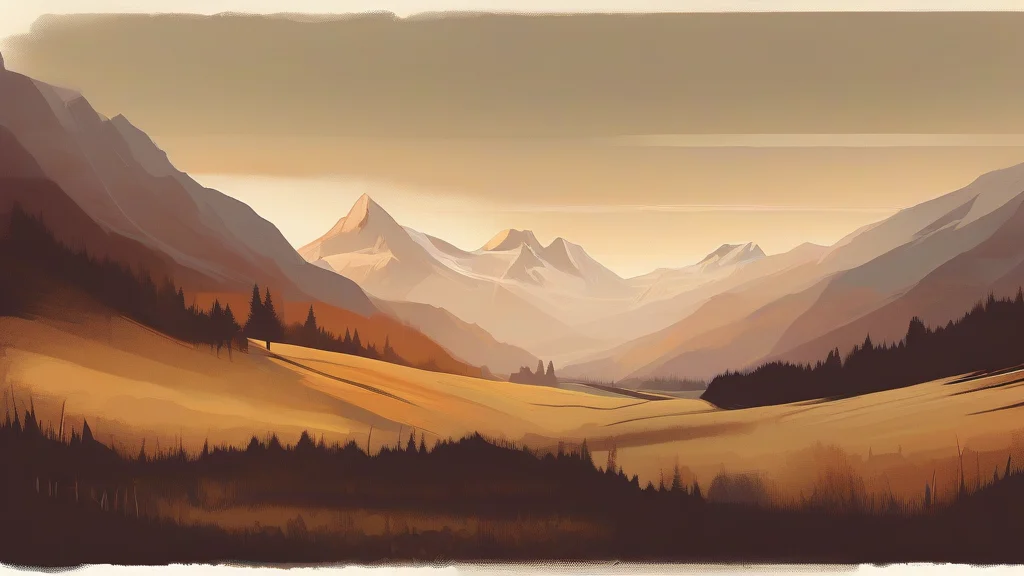
What does alp mean?
An alp is a high mountain, particularly one whose slopes rise above the tree line into open grassland. In its most familiar use, the word appears capitalized as part of "the Alps," the great mountain system of south-central Europe. But in its older and more general sense, an alp denotes any lofty peak or, especially in Switzerland and Austria, a high mountain meadow used as seasonal pasture for cattle and sheep. This pastoral meaning remains alive in Alpine communities, where herders still move livestock up to the alps each summer to graze on rich mountain grasses. The word evokes height, thin air, rugged beauty, and centuries-old farming traditions. It derives from Latin Alpes, the name the Romans gave to the European range, which itself may trace back to a pre-Roman word for hill or high pasture. Though not common in everyday speech outside mountaineering contexts, "alp" endures as a precise and evocative term for the world's high places.
nounA high mountain, especially a steep grassy slope or mountain meadow used as pasture; also used (usually capitalized) to refer to any of the peaks of the Alps.
- A high mountain, especially one with steep grassy slopes.
- A mountain meadow or pastureland at high elevation, especially in Switzerland and Austria, where livestock are grazed seasonally.
"The shepherds drove their cattle up the alp to graze in the summer meadows."
"Climbers paused on the windswept alp to take in the view across the valley."
"Each June, the farmer led his herd up to the alp, where the cows would spend the summer grazing."
The plural "alps" commonly refers to multiple such mountains or meadows; note that "the Alps" (capitalized) names the specific European mountain range.
"The region's high alps offer some of the finest summer grazing in Europe."
The word "alp" is older than Rome's reach into the mountains — it likely comes from a pre-Latin word for "hill," which is why the Alps themselves carry the name.
Reviewed by Deb Chak, Editor. AI-assisted content curated by RJS Tech Solutions LLP.
Etymology of alp
The word "alp" comes from Latin "Alpes," the name the Romans applied to the great mountain range of Europe. The Latin form itself is generally thought to derive from a pre-Roman, possibly Celtic, root meaning "hill" or "high pasture." From the same source come "Alps" and the adjective "alpine." In English, the word has been used since at least the early modern period both for peaks of the Alps specifically and, by extension, for other high mountains and mountain pastures.
How alp is actually used
In everyday English, "alp" most often appears in reference to the European Alps, usually capitalized. The broader sense — any high mountain or high-altitude pasture — survives chiefly in Alpine regions and in mountaineering literature. The word carries connotations of height, remoteness, and pastoral tradition.
Easily confused with alp
An elk is a large deer-like mammal, while an alp is a high mountain or mountain pasture.
"The Alps" refers specifically to the great mountain range of Europe, while "an alp" can mean any high mountain or mountain meadow.