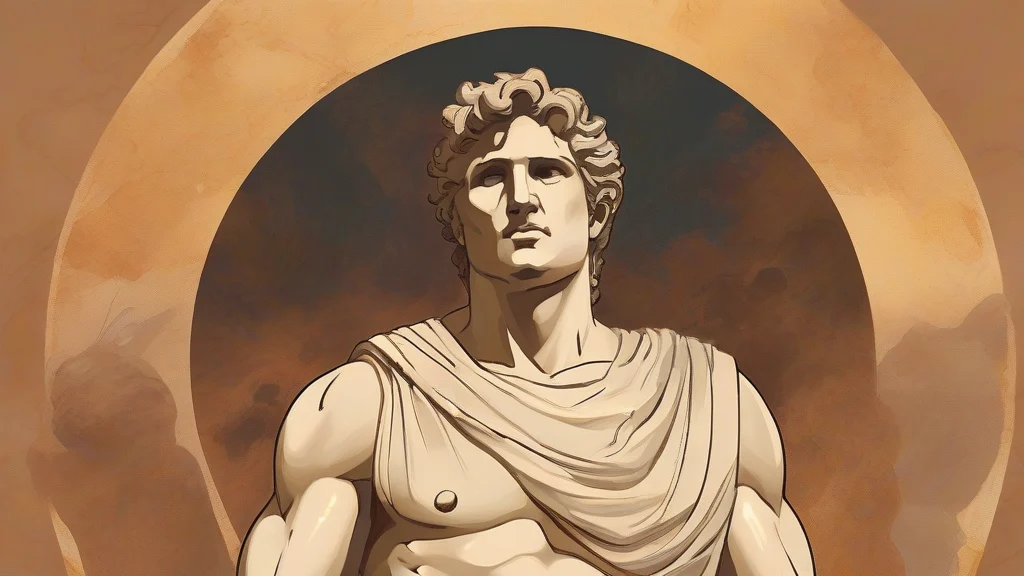
What does apollo mean?
Apollo is best known as one of the most significant deities of the ancient Greek and Roman world: the Olympian god of music, poetry, prophecy, healing, archery, and light. Worshipped at celebrated sanctuaries such as Delphi, where his oracle shaped decisions across the Mediterranean world, he came to embody ideals of harmony, reason, and artistic perfection — qualities later writers summarized as 'Apollonian.' His cult spread throughout the classical world, and his temples rank among the most famous ruins of antiquity. In modern times the name took on a second life through NASA's Apollo program, which carried the first human beings to the Moon between 1968 and 1972, making the name synonymous with one of humanity's greatest achievements. By extension, 'an Apollo' can describe an exceptionally handsome young man, a literary allusion that persists today. Few names bridge ancient religion and modern exploration so vividly.
The ancient Greek and Roman god of music, poetry, prophecy, healing, archery, and light; also, by extension, a strikingly handsome young man.
"Poets invoked Apollo as the leader of the Muses and patron of song."
Always capitalized when referring to the deity.
NASA's Apollo program, the series of crewed lunar missions conducted between 1968 and 1972, including Apollo 11, which achieved the first crewed Moon landing.
"The Apollo program remains the only effort to have sent humans beyond low Earth orbit."
Used attributively before a mission number, as in 'Apollo 13.'
The plural is rare and typically refers either to multiple statues or depictions of the god or, figuratively, to several exceptionally handsome men.
"The museum's gallery displayed marble Apollos from three different centuries."
Despite being one of the most important gods of the ancient world, Apollo's very name has no agreed origin — scholars still debate whether it comes from Greek at all.
Reviewed by Deb Chak, Editor. AI-assisted content curated by RJS Tech Solutions LLP.
Etymology of apollo
The name Apollo entered Latin from Greek, where the god was worshipped as early as the eighth century BCE, but its ultimate origin remains genuinely uncertain — scholars have proposed pre-Greek Anatolian (Lycian or Hittite) roots without consensus. It was adopted into Roman religion largely unchanged, preserving both name and character. Derivative forms such as 'Apollonian' reflect his enduring association with order and beauty, and the name was revived in the twentieth century for NASA's lunar missions.
Related word forms
How apollo is actually used
As a proper noun, Apollo is capitalized when referring to the deity or the space program. In literary usage it often appears as a symbol of youthful male beauty, rational order, and artistic inspiration, frequently contrasted with Dionysus. Lowercase or adjectival uses are rare outside specialized contexts.
Easily confused with apollo
Helios was the separate Greek personification of the Sun itself, while Apollo was originally a god of prophecy, music, and healing; the two were only gradually conflated in later classical thought.