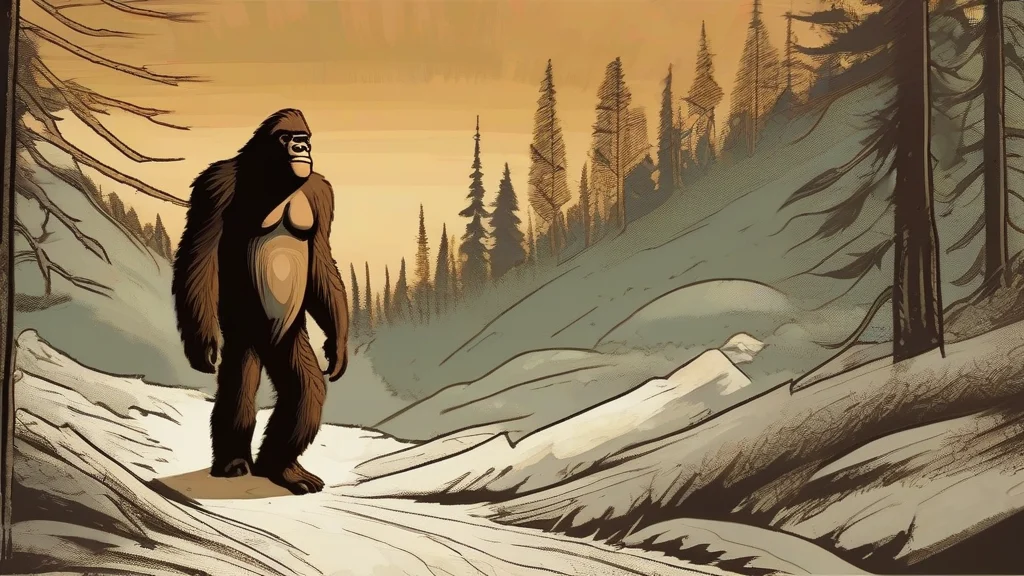
What does bigfoot mean?
"Bigfoot" names the legendary ape-like humanoid said to inhabit the remote forests of western North America, particularly the Pacific Northwest. Descriptions typically depict a large, hairy, bipedal creature standing well over two meters tall, known chiefly from anecdotal sightings, blurred photographs, and plaster casts of enormous footprints — the feature that gave the creature its name. The term entered widespread use after footprint discoveries at a northern California logging site in 1958, though similar legends existed earlier under the name "sasquatch," borrowed from Indigenous languages of British Columbia. In contemporary English, "bigfoot" also functions figuratively to describe anything rumored but never verifiably confirmed, as in claims that are hard to pin down. Because no scientific evidence has ever established the creature's existence, the word often carries a wry or skeptical connotation, signaling that a claim rests on anecdote rather than proof.
A legendary large, hairy, humanlike creature reported to inhabit wilderness areas of western North America.
"Every summer, amateur researchers comb the Cascades hoping to find evidence of Bigfoot."
Usually capitalized when denoting the creature itself.
(informal) To intimidate or dominate someone through aggressive or overbearing behavior.
"He tried to bigfoot the committee into accepting his proposal without discussion."
Chiefly North American informal use.
Both plural forms appear, but "bigfeet" is more common when referring to multiple creatures; "bigfoots" is also attested.
"Witnesses claimed there were several bigfeet living in the valley."
The name comes from giant footprints found at a California logging site in 1958 — and no conclusive evidence has ever settled the mystery since.
Reviewed by Deb Chak, Editor. AI-assisted content curated by RJS Tech Solutions LLP.
Etymology of bigfoot
The word combines "big" and "foot," referring to the oversized footprints attributed to the creature. It became widespread in American English following 1958, when large tracks were reported near Bluff Creek in northern California, though the underlying legend predates the name — Canadian newspapers had used "sasquatch," from a Salishan word, by the 1920s. The terms "bigfoot" and "sasquatch" now function as synonyms for the same folkloric figure.
Related word forms
How bigfoot is actually used
Often capitalized when referring to the specific legendary creature; lowercase is common for figurative use. The word carries a connotation of implausibility or unverifiability in modern usage.
Easily confused with bigfoot
The yeti is the analogous ape-like creature of Himalayan folklore, whereas Bigfoot is the North American equivalent.