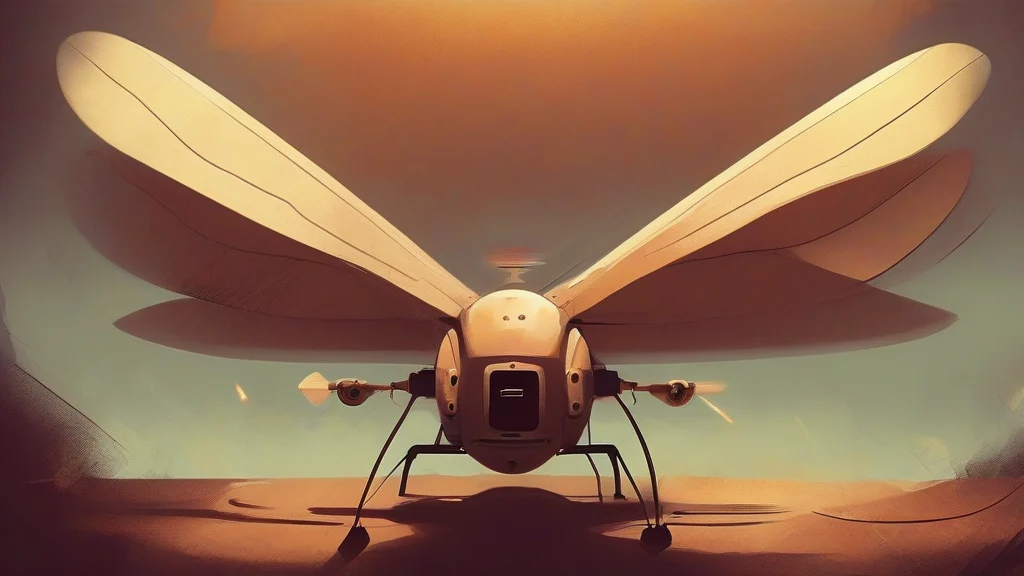
What does bombinate mean?
Bombinate is a rare verb meaning to make a continuous humming or buzzing sound — the sort of steady drone produced by a bee in flight, a distant motor, or a faulty electrical fixture. It derives from the Latin bombus, an onomatopoeic word imitating a deep booming or buzzing noise, which also gave English words such as bomb, bombard, and bombast. Because of this shared ancestry, bombinate sits in an unusually colorful word family for such an obscure term. The verb is almost exclusively literary in register: writers reach for it when they want a precise, slightly playful way to describe ambient droning rather than intermittent noise. It takes no object and typically appears in phrases like "the bees bombinated in the clover" or "the lamp bombinated faintly overhead." Though uncommon enough that many readers will meet it for the first time in a vocabulary list, its meaning is transparent once explained, making it a satisfying addition to any description of summer gardens, workshops, or humming machines.
verbTo make a continuous humming or buzzing sound; to drone.
- To make a sustained humming or buzzing sound, especially like that of a bee or other insect.
"The bees continued to bombinate among the lavender as the afternoon light faded."
"From somewhere behind the wall, a single insect bombinated lazily through the still summer air."
"The old fluorescent lamp began to bombinate audibly, distracting everyone in the quiet reading room."
When a bee 'bombs' around your garden, it isn't attacking — it's literally bombinating, a word born from the Latin for the deep drone of an insect in flight.
Reviewed by Deb Chak, Editor. AI-assisted content curated by RJS Tech Solutions LLP.
Etymology of bombinate
Bombinate comes from the Latin bombinare (also bombitare), meaning to buzz or hum, itself formed from bombus, an onomatopoeic Latin word imitating a deep booming or buzzing sound. English adopted the verb in the early 17th century. The same Latin root bombus later produced bomb, bombard, and bombast, making these the word's closest relatives in English.
How bombinate is actually used
A rare, somewhat literary word used almost always of insects, machinery, or electrical devices producing a low continuous drone. It carries a mildly whimsical or archaic flavor and appears chiefly in descriptive prose rather than everyday speech.
Easily confused with bombinate
Bombilate is a near-synonymous variant meaning to hum or buzz; both come from the same Latin root, but bombinate is the form more commonly found in modern dictionaries.