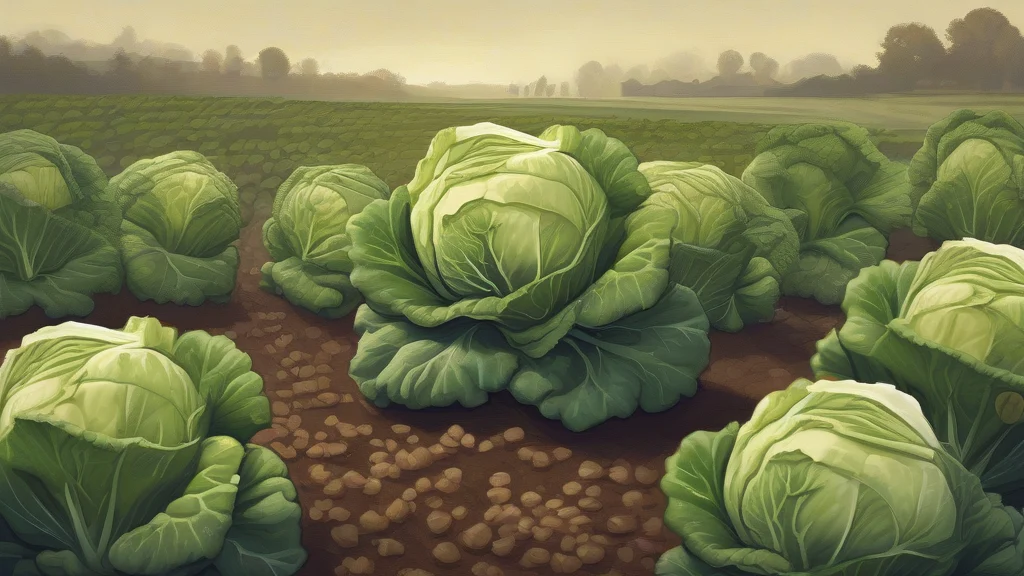
What does brassica mean?
Brassica is a noun denoting any plant of the genus Brassica, the group that includes some of humanity's most important vegetables: cabbage, broccoli, cauliflower, kale, Brussels sprouts, kohlrabi, turnip, and various mustards. The word comes straight from Latin, where brassica was the classical name for the cabbage plant itself, and it now serves as the scientific genus name as well as a convenient collective term for these crops. In practice it appears most often in botanical, agricultural, and gardening writing — in discussions of crop rotation, pest control such as protection against pigeons and aphids, or plant breeding. Gardeners speak of 'planting brassicas' or 'brassica beds', while food writers may use it to describe the peppery, sulfurous flavor profile shared by these vegetables. Though somewhat technical in register, it is a precise and useful term for anyone interested in growing or cooking this remarkably productive family of plants.
nounA plant of the genus Brassica, the cabbage family, which includes cabbage, broccoli, cauliflower, kale, Brussels sprouts, turnip, and mustard. Used especially in botanical, agricultural, and gardening contexts.
- A plant of the genus Brassica, comprising cabbage and related vegetables such as broccoli, cauliflower, kale, and mustard.
"The allotment's brassicas were thriving despite the cold snap."
"Rotate your brassicas each year to avoid a buildup of clubroot in the soil."
"Pigeons can strip a bed of young brassicas overnight if they are left unprotected."
The anglicized plural 'brassicas' is standard in general and horticultural use; the Latinate 'brassicae' survives mainly in formal botanical writing.
"She planted her brassicas in late spring for an autumn harvest."
Cabbage, broccoli, cauliflower, kale, and Brussels sprouts are all technically the same species — Brassica oleracea — shaped by centuries of human selection into wildly different vegetables.
Reviewed by Deb Chak, Editor. AI-assisted content curated by RJS Tech Solutions LLP.
Etymology of brassica
Brassica entered English in the late seventeenth century as a direct adoption of the Latin brassica, the ancient Roman name for the cabbage plant. Linnaeus fixed it as the formal genus name for cabbages and their relatives in his eighteenth-century system of botanical classification, and it has remained so ever since. The ultimate origin of the Latin word is obscure; it does not derive transparently from other well-attested Indo-European roots, so no secure cognates outside the Romance descendants of the Latin term can be cited with confidence.
Related word forms
How brassica is actually used
The word is chiefly used by botanists, farmers, gardeners, and food writers rather than in everyday speech; most speakers would name the specific vegetable instead. The anglicized plural 'brassicas' is standard when referring to multiple plants.