What does chianti mean?
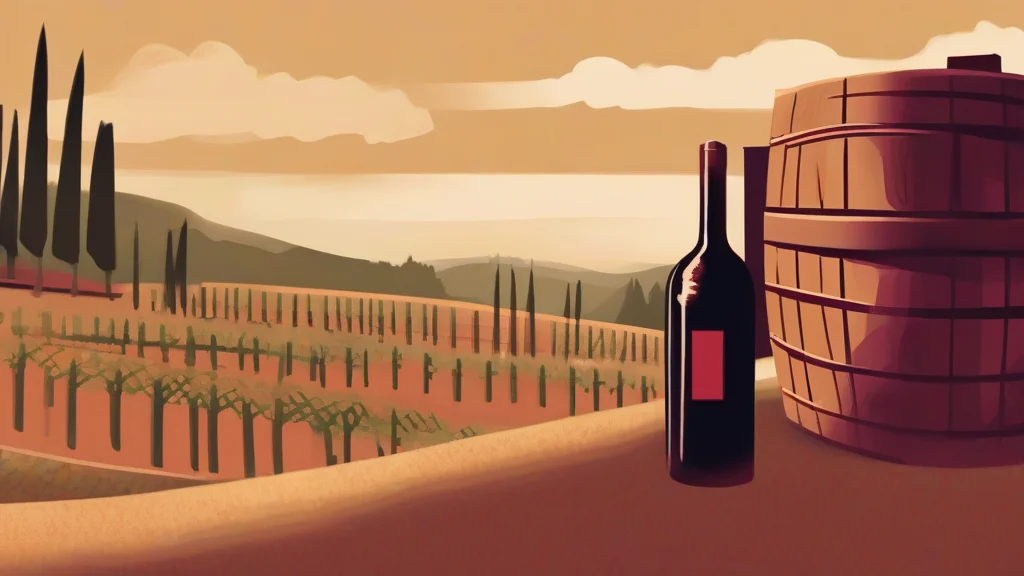
Chianti is a dry red wine produced in the Chianti district of Tuscany, Italy, one of the country's best-known and most historic wine names. Made principally from the Sangiovese grape, it ranges from everyday table wine to the more rigorously regulated Chianti Classico, drawn from the original historic zone between Florence and Siena. For much of the twentieth century Chianti was famous for being sold in squat bottles wrapped in woven straw baskets, known as fiaschi, which became an icon of Italian restaurants worldwide even as most producers moved to standard glass bottles. The word also refers to the picturesque Tuscan hill country where the wine is grown, an area now closely associated with tourism and expatriate life. In English usage Chianti evokes rustic Italian dining and old-world tradition, appearing naturally in phrases such as 'a bottle of Chianti.' It remains a staple of wine lists and a byword for approachable, food-friendly Italian red wine.
A dry red wine produced in the Chianti region of Tuscany, typically made predominantly from Sangiovese grapes.
"She ordered a carafe of Chianti to go with the spaghetti."
The hilly region of Tuscany, Italy, where this wine is produced.
"They spent their honeymoon touring the olive groves of Chianti."
This sense normally takes a definite article or functions as a proper place name.
Rarely pluralized except when referring to multiple bottles, brands, or vintages of the wine; usually treated as an uncountable mass noun.
"The cellar held several aged Chiantis alongside the French bordeaux."
That straw-wrapped flask of Chianti on every trattoria table has a name of its own — the 'fiasco' — and it's where the English word for a humiliating failure actually comes from.
Reviewed by Deb Chak, Editor. AI-assisted content curated by RJS Tech Solutions LLP.
Etymology of chianti
The word Chianti comes from Italian, taking its name from the Chianti hills region of Tuscany between Florence and Siena, where the wine has been made since at least the medieval period; the ultimate origin of the place name itself is uncertain, with Etruscan roots sometimes suggested. English borrowed the term directly from Italian, first attested around the early nineteenth century, as the wine gained international recognition. It shares its provenance with other Italian loanwords tied to the same wine culture, such as fiasco, the straw-covered flask in which Chianti was traditionally sold.
Related word forms
How chianti is actually used
Usually capitalized when referring to the wine by its protected designation of origin, though lowercase appears informally in generic use ('a glass of chianti'). The wine carries connotations of rustic Italian hospitality and traditional trattoria dining. In Britain, the humorous coinage 'Chiantishire' mocks the concentration of affluent British expatriates in the Tuscan countryside.
Easily confused with chianti
Chianti is a dry red wine from Tuscany made mainly from Sangiovese grapes, whereas Chardonnay is a white wine grape variety originating in Burgundy.