What does cycas mean?
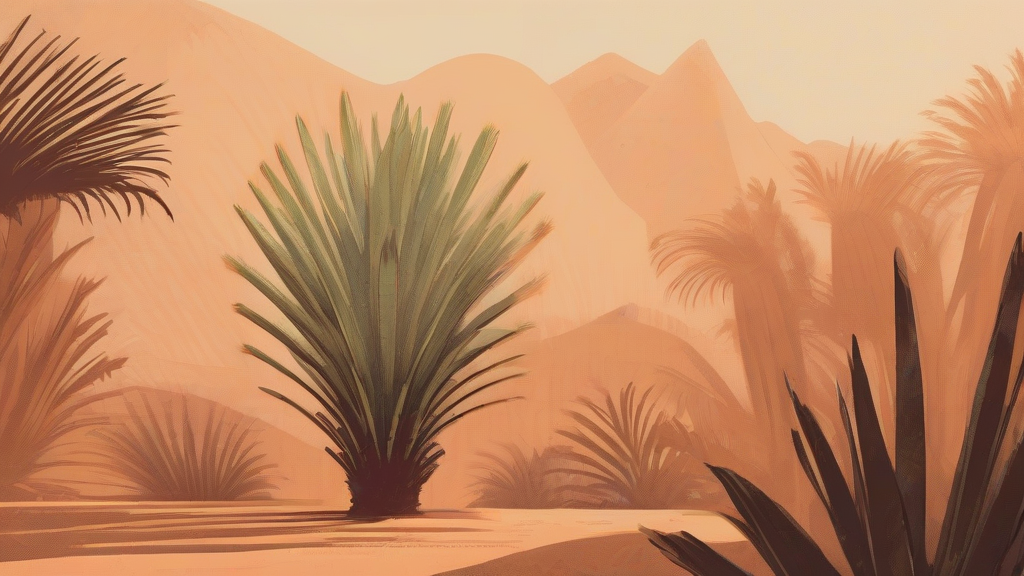
Cycas is the name of a genus of ancient, palm-like plants belonging to the family Cycadaceae. Despite their resemblance to palms, cycads are gymnosperms — cone-bearing seed plants whose lineage stretches back roughly 250 million years, making them far older than any true palm. Members of the genus are native to tropical and subtropical parts of Asia, East Africa, and the Pacific islands, and they typically feature a stout, unbranched trunk topped by a rosette of large, stiff, feather-shaped leaves. The best-known species, Cycas revoluta, is commonly called the sago palm and is widely grown as an ornamental plant in gardens and as a houseplant, prized for its architectural form and slow growth. In everyday speech, gardeners usually refer to these plants simply as 'cycads' or 'sago palms', reserving 'Cycas' for formal botanical discussion. The word carries connotations of antiquity and resilience, since surviving cycads are often described as living fossils that once shared the landscape with the dinosaurs.
nounA genus of palm-like evergreen plants of the family Cycadaceae, native to tropical and subtropical Asia and the Pacific, characterized by a stout trunk and a crown of large, stiff, feather-like leaves. It includes species such as the sago palm (Cycas revoluta).
- A genus of palm-like gymnosperms (family Cycadaceae), including the sago palm, native to Asia and the Pacific.
- (Loosely) any individual plant belonging to this genus.
"The garden's oldest specimen, a Cycas revoluta bought as a seedling decades ago, now dominates the fernery with its crown of rigid, glossy fronds."
"Botanists have long studied Cycas for clues about how ancient seed plants reproduced."
"In Japanese gardens, the king sago (Cycas revoluta) is pruned into striking sculptural forms."
As a genus name treated as a mass noun, plural references typically use 'species of Cycas' or treat the term as unchanged; the botanical plural 'cycades' is rare outside specialist literature.
"The collection holds several species of Cycas, ranging from towering trunks to dwarf forms."
Cycads like Cycas were munched by dinosaurs 200 million years ago — and they're still thriving today, earning them the nickname 'living fossils'.
Reviewed by Deb Chak, Editor. AI-assisted content curated by RJS Tech Solutions LLP.
Etymology of cycas
The name Cycas entered scientific usage through Linnaeus, who established the genus in the mid-eighteenth century. Its origin traces back to ancient Greek, where a related word referred to a kind of palm-like plant mentioned by writers such as Theophrastus, though the precise chain of transmission is not fully documented and the ultimate derivation remains somewhat obscure. From the genus name came the broader term 'cycad', used for all members of the order Cycadales.
Related word forms
How cycas is actually used
Formal or technical register, used chiefly in botany and horticulture. In casual gardening contexts, people more often say 'cycad' or 'sago palm' than 'Cycas'; note also that when referring to the genus by name, it should be capitalized and often italicized per botanical convention.
Easily confused with cycas
A cycad is any member of the broader group of ancient seed plants (order Cycadales), while Cycas refers specifically to one genus within that group.
Palms are flowering plants (monocots), whereas Cycas is a gymnosperm that only resembles a palm in appearance.