What does abaca mean?
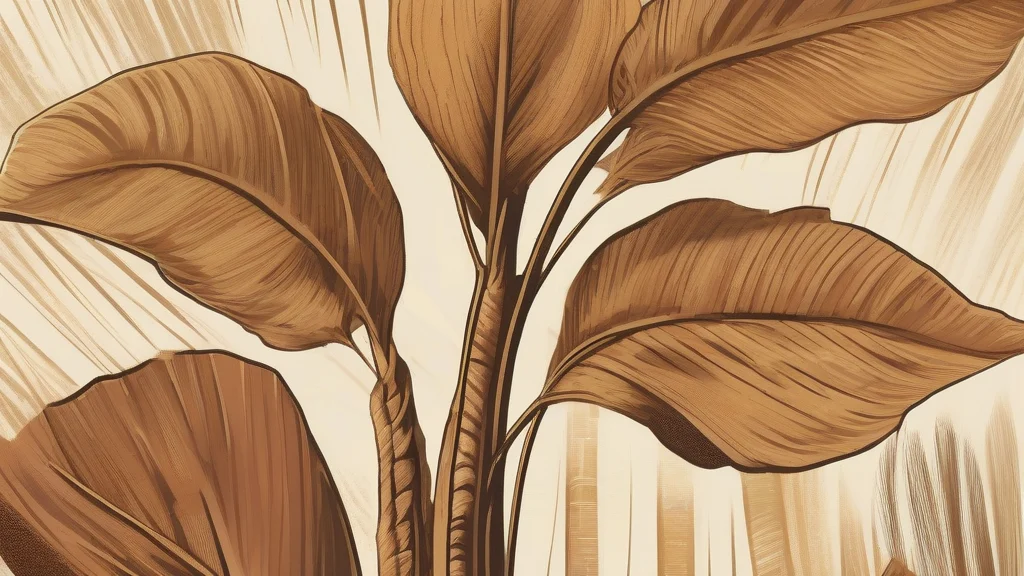
Abaca is a noun referring both to a large herbaceous plant of the banana family, native to the Philippines, and to the strong fibre extracted from its leafstalks. The fibre — long known commercially as Manila hemp, though unrelated to true hemp — is prized for its exceptional tensile strength and resistance to salt water, making it historically important for ship's ropes, hawsers, and fishing lines. Today abaca remains economically significant in the Philippines, the world's principal producer, where it is harvested by stripping the fibrous sheaths from the plant's pseudostems. Its uses have expanded into specialty papers, including tea bags, currency notes, and the familiar manila envelope. The word comes from the Tagalog name for the plant and entered English through Spanish during the colonial period. Though technical rather than conversational, abaca is a useful term in discussions of natural fibres, tropical agriculture, and maritime history.
nounA plant of the banana family native to the Philippines, cultivated for its leafstalks, which yield a strong fibre used especially for rope, cordage, and paper. The fibre itself is also called abaca, commonly known as Manila hemp.
- The Philippine plant Musa textilis, a banana relative grown for its fibre.
- The strong fibre obtained from its leafstalks, used for ropes, cordage, and specialty papers, often called Manila hemp.
"The ship's hawsers were made of abaca, prized for its strength and resistance to salt water."
"Farmers in the Bicol region harvest abaca by stripping the fibrous sheaths from its stalks."
"The banknotes were printed on paper blended with abaca for extra durability."
Rarely pluralized in practice; the singular typically serves for both the plant and the fibre.
"The plantation stretched across hillsides planted with young abacas."
That 'Manila envelope' on your desk may well be made from abaca — a giant banana relative, not hemp at all.
Reviewed by Deb Chak, Editor. AI-assisted content curated by RJS Tech Solutions LLP.
Etymology of abaca
The word abaca derives from the Tagalog word abaká, the local name for the plant, and was adopted into English via Spanish during the period of Spanish colonial rule in the Philippines, becoming established by the early nineteenth century as trade in Philippine fibre grew. It belongs to a small group of English words borrowed directly from Philippine languages.
How abaca is actually used
A technical and commercial term rather than everyday vocabulary; it appears mainly in contexts concerning textiles, cordage, agriculture, and papermaking. In trade usage, "Manila hemp" is the traditional name, though the word has no relation to true hemp.
Easily confused with abaca
"Aback" is an adverb meaning backward or taken by surprise, while "abaca" is a noun referring to a Philippine plant and its fibre.