What does aback mean?
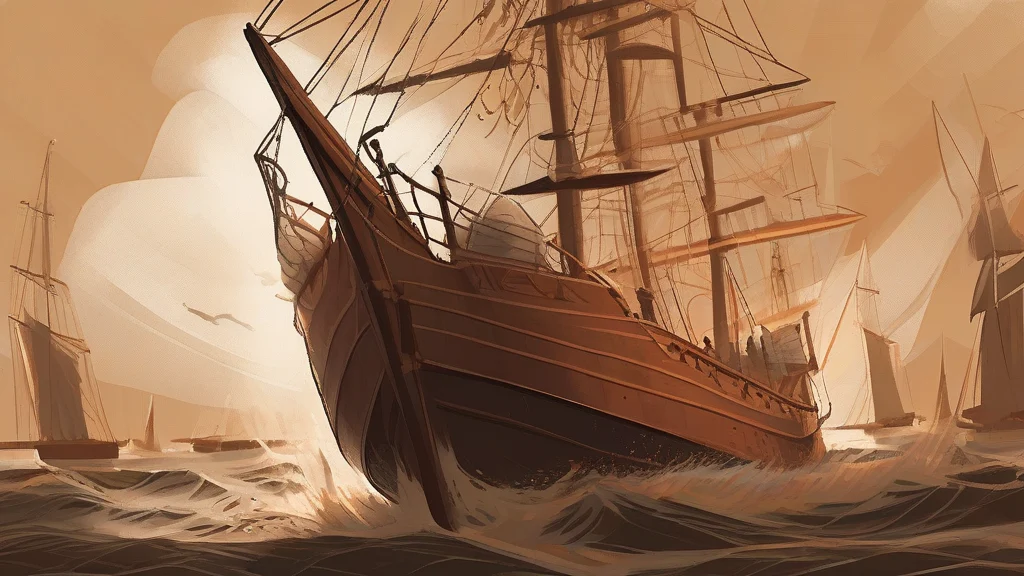
"Aback" is an adverb that survives in modern English almost entirely through one vivid idiom: to be "taken aback" is to be suddenly and unexpectedly surprised or disconcerted. The phrase originated at sea — a sailing ship was said to be "taken aback" when a shift in the wind pressed its sails backwards against the masts, halting or endangering the vessel. From this literal nautical predicament, the term extended figuratively to people caught off guard by startling news or behaviour, preserving the image of being knocked off balance by an unforeseen force. Outside the expression "taken aback", the word appears chiefly in historical accounts of seamanship, where "laying aback" described a deliberate manoeuvre as well as an accidental one. Its enduring popularity lies in its economy: two syllables convey precisely that momentary, wide-eyed pause when reality departs from expectation, making it a staple of both everyday speech and polished writing.
Surprised or disconcerted by something unexpected, especially in the phrase 'taken aback'.
"I was taken aback by how quickly the children adapted to their new school."
Nearly always used in the passive-like construction 'taken aback' rather than standing alone.
(Nautical) Of a ship's sails, pressed backwards against the masts by a contrary or shifting wind.
"The helmsman lost control when the mainsail was taken aback by the gust."
This is the original literal sense, now largely confined to maritime history and sailing literature.
When sailors say a ship was 'taken aback', they mean the wind flipped its sails the wrong way — which is exactly how the word came to describe that stunned, wrong-footed feeling.
Reviewed by Deb Chak, Editor. AI-assisted content curated by RJS Tech Solutions LLP.
Etymology of aback
The word combines the Old English prefix "a-" (from "on") with "back", forming a compound attested since Middle English. Its nautical use — describing sails driven backward against their masts — was well established by the age of sail, and the figurative sense of being startled appeared by the eighteenth century. The underlying element "back" descends from Proto-Germanic, giving it Germanic relatives such as "backward" and "background" rather than Latin or Greek cognates.
How aback is actually used
Almost exclusively used today within the fixed expression 'taken aback', typically followed by 'by' or 'at'. It carries a neutral to mildly negative connotation of being caught off guard rather than offended. The nautical sense survives mainly in historical or technical sailing contexts.