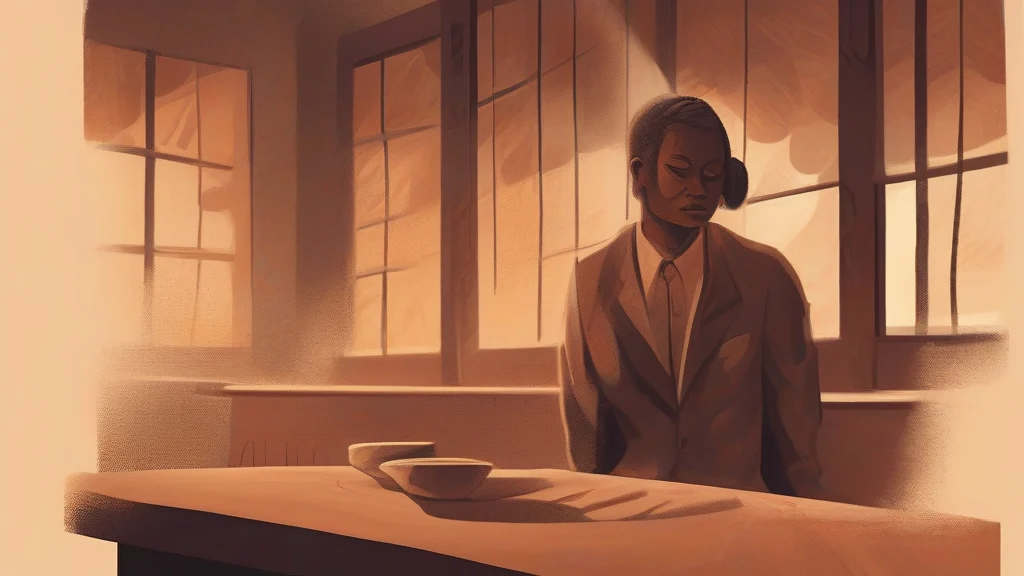
What does abashed mean?
'Abashed' is an adjective describing someone who feels embarrassed, ashamed, or uncomfortably self-conscious because of something they have said or done. A person caught making an obvious mistake might offer an abashed smile, while a speaker who forgets their notes may fall abashedly silent. The word carries a gentler connotation than 'humiliated': it suggests a modest, often fleeting sense of shame rather than deep disgrace, which makes it well suited to describing small social missteps. It derives from the verb 'abash', which came into Middle English from Old French 'esbahir', meaning to astonish or disconcert, and its relatives include the noun 'abashment' and the familiar 'bashful', formed by altering the same root. Somewhat formal or literary in tone, 'abashed' remains a precise and elegant choice for moments of sheepish embarrassment.
adjectiveEmbarrassed or ashamed as a result of having done something wrong, foolish, or socially awkward.
- Feeling or showing embarrassment, shame, or awkward discomfort caused by one's own actions or situation.
"She gave an abashed smile when she realized she had been talking to the wrong person."
"He looked abashed when the teacher pointed out his careless mistake."
"She was abashed to find that everyone had heard her off-key singing."
Before 'bashful' was a word of its own, it was simply 'abashed' wearing a disguise — English speakers clipped the prefix off in the 1600s and kept the shy part.
Reviewed by Deb Chak, Editor. AI-assisted content curated by RJS Tech Solutions LLP.
Etymology of abashed
'Abashed' comes from the verb 'abash', which entered English in the Middle English period from Old French 'esbair' (stem 'esbah-'), meaning to astound or disconcert, ultimately of Germanic origin. Over time the verb's sense narrowed from general astonishment to embarrassment and shame, and the past-participle form 'abashed' settled into use as a standalone adjective. In the seventeenth century English speakers altered 'abashed' to create the now-familiar word 'bashful', preserving its sense of shy self-consciousness.
Related word forms
How abashed is actually used
'Abashed' is somewhat formal or literary in register; everyday speech more often uses 'embarrassed'. It usually appears predicatively ('he felt abashed') or attributively before nouns like 'smile', 'apology', or 'silence', and it always implies mild to moderate embarrassment rather than deep humiliation.
Easily confused with abashed
'Unabashed' is the direct opposite: it describes someone who feels no embarrassment or shame at all.