What does abbe mean?
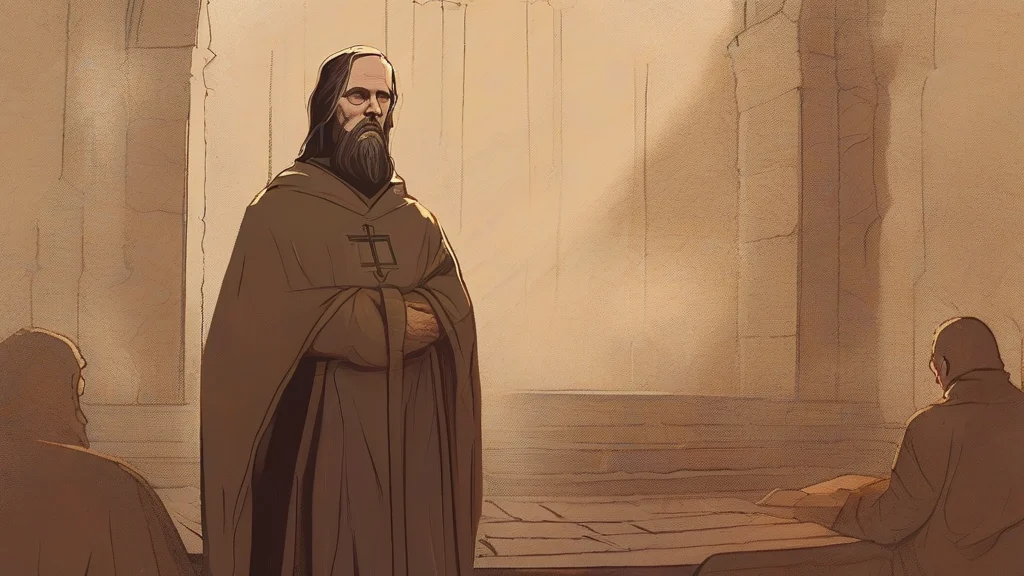
An abbé is a French cleric, most commonly understood as a secular priest — one who serves in parishes or private households rather than within a monastery. The term entered English from French and retains its foreign character, appearing chiefly in historical, literary, or biographical contexts concerning France. In the eighteenth century the title broadened well beyond ordained priests: many young men of education took the name abbé as a respectable credential while working as tutors, secretaries, or men of letters, often without any intention of taking holy orders. This gave the word a social as much as a religious resonance, evoking figures like the abbés who populated Parisian salons. In modern English, abbé remains a specialized term, useful for precision when writing about French history or fiction, but rarely encountered in everyday speech. It should be distinguished from 'abbot', the head of a monastery, which shares its etymology but denotes a very different office.
nounAn abbé is a French cleric, especially a secular priest; the title is also used more broadly for any member of the French clergy who is not a monk. In English usage it typically refers to such a priest as a figure in French society or literature.
- A French secular priest or member of the French clergy.
- The title given to certain French ecclesiastics, historically including men in minor orders or awaiting ordination.
"The young abbé tutored the nobleman's children in Latin and mathematics."
"The abbé was a familiar figure in the salons of eighteenth-century Paris."
"Cardinal Richelieu's early career included service as an abbé before his rise to power."
The plural follows the French form, retaining the accent on the final syllable.
"Several abbés attended the bishop's consecration ceremony."
In pre-revolutionary France, 'abbé' became a fashionable title for educated clergymen who never intended to say Mass — tutors, salon wits, and writers all wore the cassock without the vows.
Reviewed by Deb Chak, Editor. AI-assisted content curated by RJS Tech Solutions LLP.
Etymology of abbe
The word comes from the Old French 'abbe', meaning abbot, which derives from the Late Latin 'abbas', itself borrowed from the Greek 'abbas' and ultimately from the Aramaic 'abba', meaning 'father'. When the term passed into English, it narrowed to denote French secular clergy rather than monastic superiors. Its closest English relatives are 'abbot', 'abbess', and 'abbey', all tracing back to the same Aramaic root for 'father'.
How abbe is actually used
The word is borrowed directly from French and is usually italicized or written with the accent (abbé) in careful English prose. It carries a distinctly French flavor and is used almost exclusively in reference to France or French literature and history; it would sound odd applied to a priest of another nationality.
Easily confused with abbe
An abbot is the head of a monastery of monks, while an abbé is specifically a French secular priest not attached to a monastic order.
An abbey is a monastery or convent building complex, whereas an abbé is a person — a French priest.