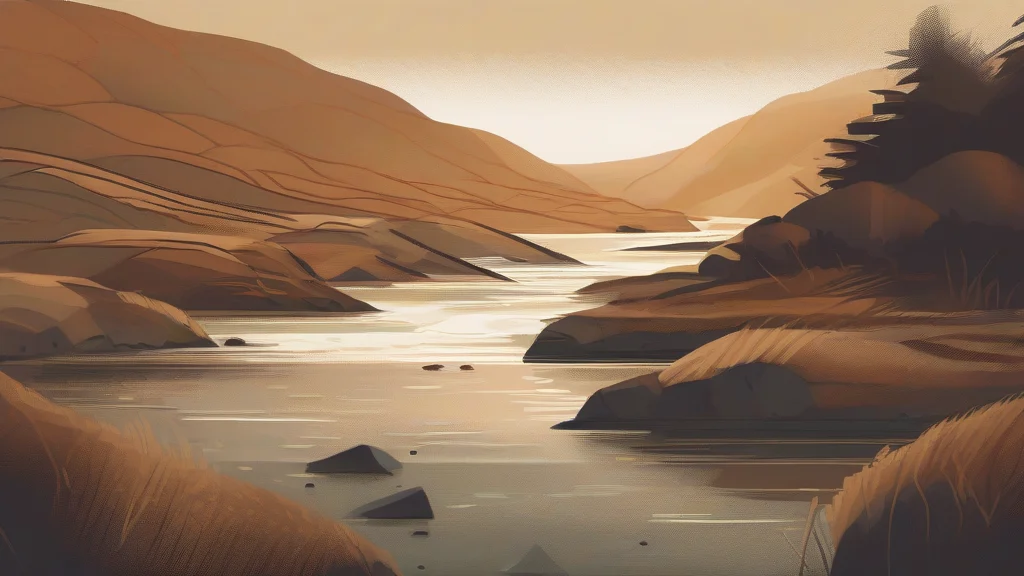
What does aber mean?
An aber is a river mouth or estuary — the point where a stream or river flows into the sea, or where two waters meet. Though it functions as an ordinary noun, the word survives today almost entirely within place names across Scotland and Wales: Aberdeen ('mouth of the River Don'), Aberystwyth, Abergavenny, and dozens of others mark settlements founded beside such confluences. The element derives from an ancient Celtic root for water or river, shared with related Celtic river-name elements such as Welsh afon. Because so many British towns take their name from a nearby aber, the word offers a compact lesson in how geography shapes language: a single Celtic syllable, carried through centuries of naming, still labels the map of Britain. For anyone interested in toponymy, recognising aber is a reliable key to reading Celtic place names.
nounA river mouth or estuary; the confluence of two rivers or where a stream meets the sea. The term survives almost exclusively in Scottish and Welsh place names.
- An estuary or river mouth, especially where a smaller stream joins a larger river or the sea.
"The village stands at the aber of the Don, where the river widens into the North Sea."
"The castle overlooks the aber where the Dee meets the tide."
"Many Scottish coastal towns grew up around an aber, sheltered from the open sea."
Very rarely pluralised outside academic or geographical writing about estuaries.
"The coastline is dotted with abers formed by short, fast-flowing Highland rivers."
You already know this word — it's hiding inside Aberdeen, one of Scotland's most famous cities, whose name literally means 'mouth of the River Don.'
Reviewed by Deb Chak, Editor. AI-assisted content curated by RJS Tech Solutions LLP.
Etymology of aber
Aber comes from an ancient Celtic root meaning water or river, found in both Brittonic (Welsh) and Goidelic (Scottish Gaelic) branches of the Celtic family. It entered English indirectly through Scottish and Welsh place names rather than as a borrowed vocabulary item. Its Celtic cousin element appears in river names such as the Avon (Welsh afon), and a parallel Gaelic form gives us the inver- of Inverness. The word has been part of British toponymy since medieval times and earlier.
How aber is actually used
Rarely used as a standalone common noun in modern English; it appears overwhelmingly within place names such as Aberdeen, Aberystwyth, and Abergavenny. It is most familiar to readers through Welsh and Scottish geography rather than everyday speech.
Easily confused with aber
German aber means 'but' or 'however' and is unrelated in meaning, despite the identical spelling.