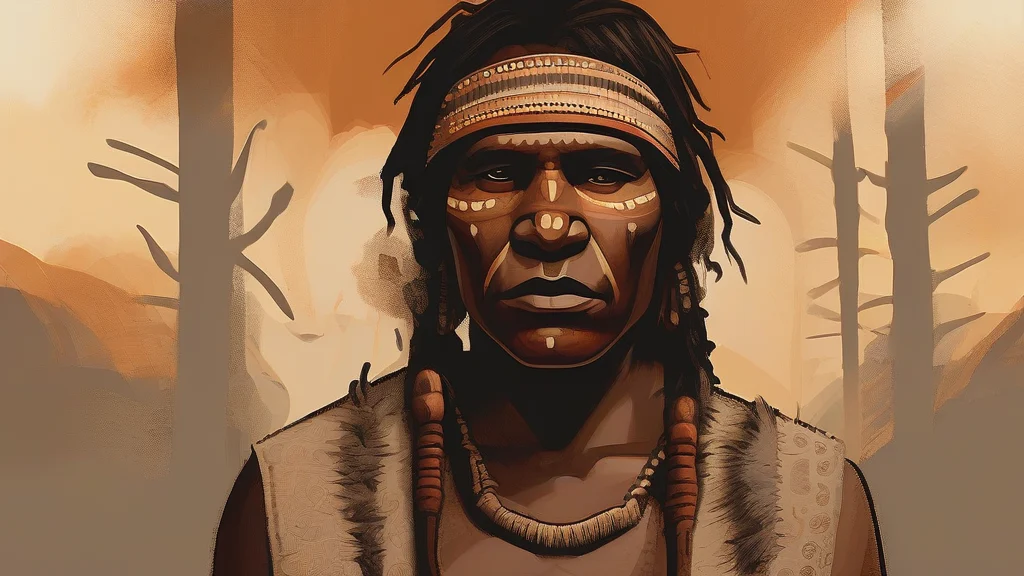
What does aboriginality mean?
Aboriginality is a formal noun denoting the quality or state of being aboriginal — that is, of belonging to the earliest known inhabitants of a particular place. It appears most often in academic and legal discourse: anthropologists use it when discussing Indigenous identity, historians when tracing who lived somewhere before recorded settlement, and lawmakers (especially in Australia) when determining eligibility for programs or recognition reserved for Aboriginal peoples. The word carries significant cultural weight. For many communities, particularly in Australia, aboriginality is not merely a matter of ancestry but of identity, kinship, community acceptance, and continuing connection to land and tradition. Because of this, scholars often caution against defining it narrowly or treating it as a fixed biological category. Derived ultimately from Latin roots meaning 'from the beginning', aboriginality is a useful term wherever questions of original inhabitance, heritage, and Indigenous status arise.
nounThe quality or state of being aboriginal; the condition of being an original inhabitant of a place from earliest known times.
- The quality or state of being aboriginal; indigenous origin or earliest-known inhabitation of a place.
- (In legal and political contexts, especially Australia) The recognized status of descent from the original inhabitants of a region.
"The museum's new exhibit explores the deep aboriginality of the continent's first peoples and their enduring connection to the land."
"Anthropologists debated how best to define aboriginality without reducing living cultures to stereotypes of the past."
"Under Australian law, proof of aboriginality can require genealogical documentation and community recognition."
Rarely pluralized in practice; usage typically treats aboriginality as an uncountable quality, though the plural may appear in academic texts discussing multiple conceptions or definitions.
"Scholars have proposed competing aboriginalities, each shaped by different legal and cultural frameworks."
Though 'aboriginal' dates back to ancient Rome as a term for Italy's earliest inhabitants, 'aboriginality' as an abstract noun is surprisingly modern — a scholarly coinage for something humanity's oldest cultures have embodied for tens of thousands of years.
Reviewed by Deb Chak, Editor. AI-assisted content curated by RJS Tech Solutions LLP.
Etymology of aboriginality
Aboriginality derives from 'aboriginal', which comes from the Latin 'aboriginem' (nominative 'aborigo'), meaning an original inhabitant — a compound of 'ab' ('from') and 'origine'/'oriri' ('to arise'), hence 'from the beginning'. Roman writers used the related term for Italy's earliest peoples, and English adopted 'aboriginal' in the 17th century, applying it increasingly to Indigenous peoples of colonized lands. The abstract noun form, aboriginality, is a much later formation, arising primarily in academic, legal, and political discourse of the modern era.
Related word forms
How aboriginality is actually used
A formal, largely academic word used chiefly in anthropology, law, postcolonial studies, and discussions of Indigenous rights. In Australia it carries particular legal and political weight, where 'Aboriginality' is tied to official definitions of identity. It should be handled respectfully in contexts concerning Indigenous peoples, and is rarely used in everyday conversation.
Easily confused with aboriginality
Aboriginality refers to being indigenous or original to a place, while abnormality means deviation from what is normal or expected — the words look similar but are entirely unrelated in meaning.