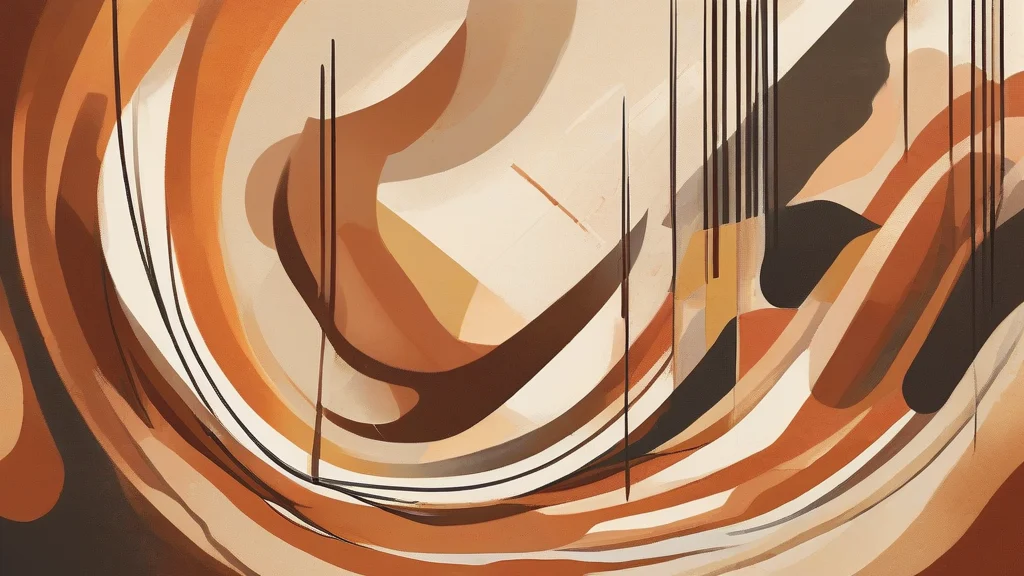
What does abstractionism mean?
Abstractionism is a noun referring primarily to the movement in modern art that abandons the depiction of recognizable objects from the visible world. Instead of representing people, landscapes, or still lifes, abstractionist works are built from elements such as colour, line, shape, and texture, which may be geometric or freely expressive. Emerging prominently in the early twentieth century with pioneers such as Wassily Kandinsky, Piet Mondrian, and Kazimir Malevich, abstractionism became one of the defining currents of modern art, later flourishing in movements like Abstract Expressionism. A secondary, less common sense describes a habit of mind: a tendency toward abstract theorizing at the expense of concrete detail, sometimes used critically. The word derives from 'abstract', ultimately from Latin abstrahere, meaning 'to draw away'. In contemporary usage it appears chiefly in art history, criticism, and museum contexts, where it signals both a style and a philosophical stance about what art can be.
An art movement or style in which works do not depict recognizable objects from the real world, using form, colour, and line as their primary means of expression.
"Mondrian's grids are among the most instantly recognizable achievements of abstractionism."
This is by far the dominant sense; it is standard in art-historical writing.
A tendency to think or argue in abstract terms rather than dealing with concrete particulars.
"He faulted the proposal for its abstractionism, arguing that it ignored the day-to-day realities of teachers."
Less common than the art sense and often pejorative, implying impractical detachment.
Rarely used in the plural; the singular typically covers the movement as a whole. A plural may appear when contrasting distinct schools or varieties of abstract art.
"The exhibition juxtaposed several distinct abstractionisms, from Suprematism to Color Field painting."
When Kandinsky helped launch abstractionism, some critics dismissed it as pictures of nothing — a century later, those 'nothings' sell for tens of millions.
Reviewed by Deb Chak, Editor. AI-assisted content curated by RJS Tech Solutions LLP.
Etymology of abstractionism
Abstractionism was formed in English from 'abstraction' plus the suffix '-ism', which marks doctrines, movements, or styles. The root goes back to Latin abstrahere, 'to draw away or separate', formed from abs- ('away') and trahere ('to pull'), which also gives English words such as 'abstract', 'extract', and 'attract'. The term arose in the early twentieth century alongside the emergence of nonrepresentational painting, when critics needed a name for art that deliberately drew away from visible reality. Its cognates include the adjective 'abstract' and the noun 'abstraction', both far older in English.
Related word forms
How abstractionism is actually used
In everyday use, abstractionism almost always refers to abstract art; the sense relating to abstract thinking is rarer and often carries a mildly critical connotation, suggesting detachment from practical realities. The term is neutral-to-formal in register and appears mainly in art criticism, art history, and academic writing. Some writers simply use 'abstraction' for the art movement as well, so context matters when distinguishing the two.
Easily confused with abstractionism
Abstraction is the general process or concept of being abstract (in art or thought), while abstractionism specifically denotes the art movement or doctrine devoted to abstraction.
Absenteeism refers to habitual absence from work or duty and merely resembles abstractionism in its -ism ending; the two are unrelated in meaning.