What does accentor mean?
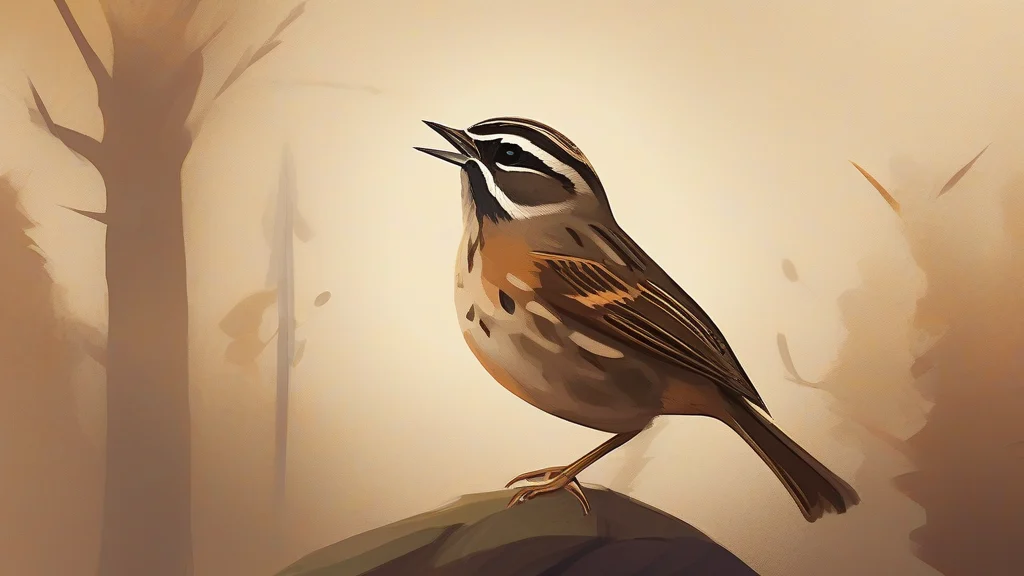
An accentor is a small, unobtrusive songbird belonging to the family Prunellidae, a group native to Europe and Asia. The best-known species is the hedge accentor, familiar across the British Isles under its more common name, the dunnock — a plain brown-and-grey bird that skulks in hedgerows and gardens, often mistaken for a sparrow. Other members of the family include the alpine accentor of mountainous regions and the Siberian accentor, which occasionally makes celebrated appearances far outside its normal range. The word has a second, now largely historical sense: in church contexts, an accentor was a singer, or the person who led the singing, in a choir — essentially synonymous with precentor. This dual meaning reflects the word's Latin origin, from ad- ('to') and cantor ('singer'), literally 'one who sings along'. Today you will encounter 'accentor' almost exclusively in ornithology, where it lends a touch of formality to some of the most modest birds in the landscape.
A small songbird of the family Prunellidae, having dull brownish plumage and found chiefly in Europe and Asia.
"We watched a Siberian accentor feeding along the hedgerow — a rare sighting so far west."
Almost always encountered in ornithological contexts; the hedge accentor is commonly known as the dunnock.
A singer, or leader of the singing, in a church choir; a precentor.
"The cathedral's accentor intoned the opening verse of the psalm."
Historical and now rare; 'precentor' is the usual modern term for this role.
Regular plural; used both for multiple birds of the family and, in historical texts, for multiple choir singers.
"Alpine accentors are often seen in small flocks at high elevations."
The dunnock's formal name, hedge accentor, comes from Latin for 'one who sings with' — a surprisingly poetic title for one of Britain's most ordinary-looking garden birds.
Reviewed by Deb Chak, Editor. AI-assisted content curated by RJS Tech Solutions LLP.
Etymology of accentor
The word 'accentor' derives from medieval Latin accentor, formed from the Latin verb accinere ('to sing to or accompany'), itself built on ad- ('toward') plus canere ('to sing'), the same root that gives us cantor, chant, and incantation. It entered English in the early modern period, first used of those who led or accompanied singing in churches. Naturalists later applied the term to the Prunellidae birds, presumably alluding to their song, and this ornithological sense became the dominant one from the nineteenth century onward.
How accentor is actually used
The ornithological sense is the only one in common modern use, appearing chiefly in birding literature and field guides; the ecclesiastical sense ('choir leader') is now rare and largely historical. In everyday British speech, the hedge accentor is almost always called by its familiar name, the dunnock.
Easily confused with accentor
A precentor is specifically an official who leads congregational singing in a cathedral or church, whereas 'accentor' as a musical term is a broader, largely historical word for such a singer, and as a modern word usually refers to the bird.
An ascendant is someone rising in power or influence, unrelated in meaning to 'accentor', despite a superficial similarity in spelling.