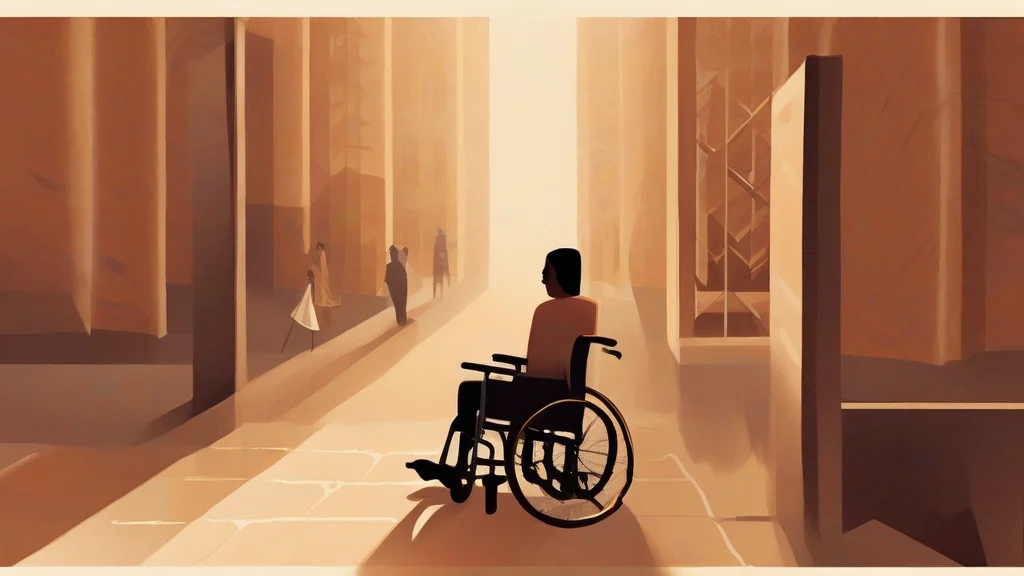
What does accessibility mean?
Accessibility is the quality of being easy to reach, enter, use, or understand. It applies most prominently to physical spaces, such as buildings designed with ramps, wide doorways, and elevators so that people with disabilities can move through them freely, but it extends equally to digital products, services, and information that anyone can obtain without unnecessary barriers. In recent decades the word has taken on strong associations with inclusivity and social responsibility: web accessibility, for instance, refers to designing websites usable by people with visual, auditory, motor, or cognitive impairments, often guided by formal standards. A secondary sense describes works of art, writing, or personalities that are approachable and easy to appreciate rather than obscure or difficult. Because accessibility touches law, design, technology, and everyday courtesy, it has become an essential term in conversations about equity and usability alike.
nounThe quality of being easy to approach, enter, use, or obtain; the extent to which a place, service, product, or information can be reached and used by people, including those with disabilities.
- The degree to which a place, building, or environment can be entered and used by everyone, especially people with disabilities.
- The ease with which information, services, technology, or products can be obtained or used.
- The quality of being easy to approach, understand, or appreciate (of a person, style, or work).
"The new library was praised for its accessibility, with ramps, lifts, and braille signage throughout."
"The museum invested heavily in accessibility, adding tactile exhibits and audio guides for visually impaired visitors."
"Critics admired the composer's accessibility — her melodies were instantly memorable even to casual listeners."
Rarely used in the plural; the singular is standard even when referring to multiple aspects or types of accessibility.
"The report examined the accessibilities of several public buildings, though such usage is uncommon."
The word "accessibility" only became a household term after the web did — today it shapes laws, building codes, and how billions of people experience the internet.
Reviewed by Deb Chak, Editor. AI-assisted content curated by RJS Tech Solutions LLP.
Etymology of accessibility
Accessibility derives from the Latin verb accedere, meaning "to approach" or "to come near," formed from ad- ("toward") plus cedere ("to go"). Through Late Latin accessibilis, it passed into English via Old French, first appearing in English in the early 17th century in the sense of being approachable. Its sibling words include access, accessible, accession, and accessory, all sharing the same Latin root cedere, "to go or yield." The word's modern prominence grew sharply in the 20th century alongside disability rights legislation and, later, digital design standards.
Related word forms
How accessibility is actually used
In modern usage, "accessibility" most often carries a positive connotation of inclusivity, particularly in design, architecture, and digital contexts. In formal and legal contexts (e.g., ADA compliance, WCAG guidelines), it refers specifically to accommodations for people with disabilities. The sense relating to art or personality being easy to appreciate is somewhat more literary.
Easily confused with accessibility
"Access" is the ability or right to reach or use something (often uncountable), while "accessibility" is the quality of something being easy to reach or use.